
Table of Contents
- Introduction: Why is This Metal So Special?
- A Story Thousands of Years Old: The History That Gives This Precious Metal Its Value
- Timeless Property #1: It’s Eternal and Virtually Indestructible
- Timeless Property #2: It’s Extremely Rare, a Natural Protector of Wealth
- Timeless Property #3: It’s Incredibly Practical and Easy to Manage
- Timeless Property #4: It’s Universally Desired Across the Globe
- So, What’s the Final Word on It All?
Introduction: Why is Gold So Special?

Have you ever stopped to wonder why gold is so special? When you hear the word, your mind probably pictures a wedding ring, a necklace, or perhaps some jewellery your grandmother keeps safely tucked away. But in reality, its value runs much deeper than just its glittering appearance. This yellow metal has been a symbol of wealth since the time of the pharaohs, more than 6,000 years ago! It isn’t like the paper money we use every day, which can lose its value when governments decide to print more. The value of this asset remains intact because it cannot be artificially created or destroyed.
To truly understand why this precious metal is so highly valued, we need to delve into its four ‘magical’ properties. We’ll journey through time to see how its long history has proven its undeniable worth. Next, we’ll touch on its physical nature—how it’s seemingly eternal and impervious to age. Then, we will uncover why its limited supply on Earth makes it the most powerful shield for your wealth. Finally, we’ll understand just how practical and desired it is by everyone, all over the world, regardless of culture or national borders.
A Story Thousands of Years Old: The History That Gives This Precious Metal Its Value
If you want to know why this metal is so valuable, we need to act like time travellers and journey back to the ancient world. Its value wasn’t created overnight; it was built on human trust over thousands of years. From the ancient Egyptian empire, which considered it the “flesh of the gods,” to the modern central banks that store it in subterranean vaults, it has always been revered as the ultimate foundation of wealth. This long history gives gold a level of confidence that no other asset can match, ensuring it remains relevant forever.
1. The Original Symbol of Wealth and Power
Try to imagine life in the old days, long before the stock market, cryptocurrencies, or the banking system existed. How did people show they were rich and powerful? The answer was simple: by owning the lustrous yellow metal. It was the ultimate status symbol. The pharaohs of Egypt, the emperors of China, and the kings of the Aztec civilisation in the Americas all used it to signify their absolute power. The funeral mask of Pharaoh Tutankhamun, discovered almost perfectly preserved after 3,000 years, is the clearest proof of this metal’s connection to majesty and eternity.
2. The Saviour of Ancient Trade and Commerce
Before money existed, buying and selling things was incredibly difficult. The barter system, which involved swapping goods, was the norm. Imagine you were a wheat farmer who wanted to buy a new pair of shoes. You’d have to find a shoemaker who, at that exact moment, needed wheat, not chicken or fish. It was very inefficient. Then, this precious metal emerged as the hero of the story. Around 2,600 years ago, the Kingdom of Lydia created the world’s first gold coins, an innovation that changed human civilisation. Suddenly, trade became incredibly easy because it was durable, portable, consistent in value, and accepted everywhere.
3. The Backbone of the Modern Financial System
Trust in this commodity became so profound that it once formed the foundation of the entire global financial system, known as the Gold Standard. Under this system, the value of a country’s currency was directly linked to the amount of this yellow asset held in its reserves. This meant governments couldn’t just print money whenever they wanted, which kept inflation in check. Although this system was officially abandoned in 1971, central banks around the world still hold thousands of tonnes of it as a primary reserve asset, seeing it as the ultimate defence in case of a major economic crisis.
Timeless Property #1: It’s Eternal and Virtually Indestructible

One of the most compelling reasons this asset is so valuable is its extraordinary physical properties. To put it simply, it lasts forever. Other metals like iron will be consumed by rust, while silver can tarnish and turn black. But gold? It will continue to shine in its original form for all time. This permanence provides an invaluable guarantee: the wealth you store in this form today will still exist to be passed down to your grandchildren, physically unchanged, even a hundred years from now.
4. It Doesn’t Rust, Tarnish, or Corrode
From a scientific standpoint, it is a “noble metal,” meaning it is incredibly stable and unreactive. It doesn’t react with oxygen in the air or with water, which is why it never rusts or changes colour like other metals. Just imagine treasure from a Spanish galleon that sank in the 17th century; after hundreds of years at the bottom of the salty ocean, the gold coins discovered still glittered as if they were minted yesterday, while other metals had disintegrated into dust. This incredible resilience makes it the perfect choice for both fine jewellery and long-term savings.
5. It’s Impossible to Destroy with Natural Elements
It is almost impossible to destroy this yellow metal. You can heat it to incredibly high temperatures, and it will only melt. Once it cools, it becomes solid again without losing any of its mass. You can soak it in the most potent acids, and it will remain completely unaffected. Because of this extreme durability, nearly all the gold ever extracted from the Earth throughout human history still exists today. This means the ring on your finger might contain the very same atoms from a Pharaoh’s treasure or a Roman coin.
Timeless Property #2: It’s Extremely Rare, a Natural Protector of Wealth
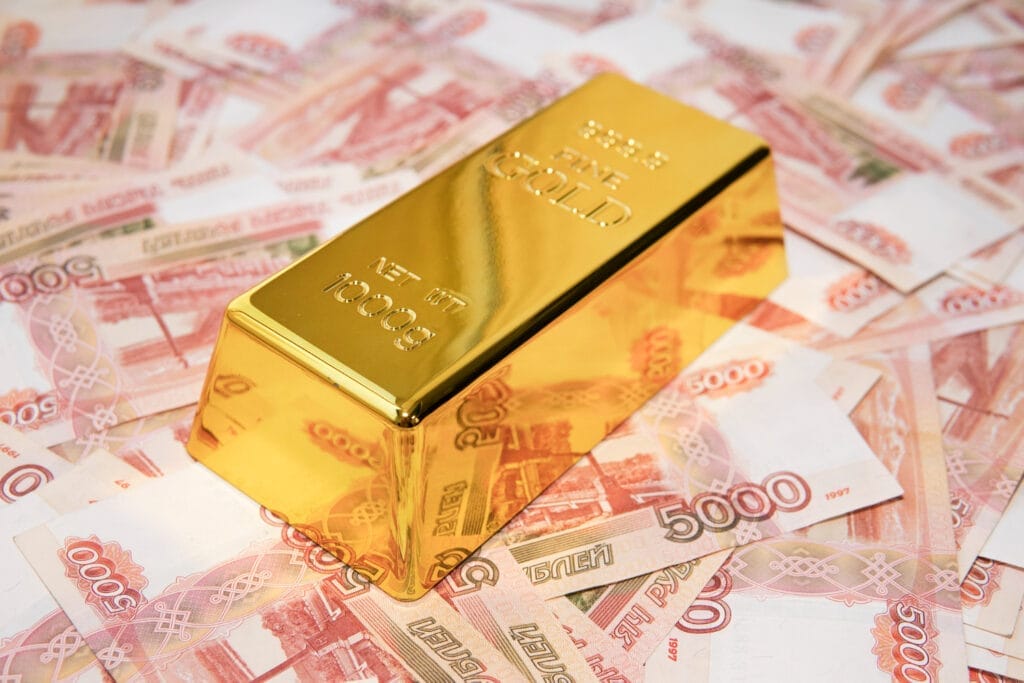
Wouldn’t you agree that things that are harder to get are usually more valuable? This is the second major advantage that this precious metal holds. It’s completely different from paper money, which governments can print endlessly until its value plummets. The supply of it on our planet is naturally limited. The process of extracting it from the ground is incredibly difficult, expensive, and time-consuming. This natural scarcity makes it a powerful shield, protecting your wealth from the threat of inflation that erodes the value of your savings.
6. A Natural Supply That Is Incredibly Hard to Find
Did you know that all the gold on Earth originally came from the collision of stars in outer space billions of years ago? That means the amount we have is finite and will never increase. It’s estimated that if you gathered all the gold ever mined, it would only form a single giant cube measuring about 22 metres on each side—just enough to fill three and a half Olympic-sized swimming pools. To get just a small amount of it, mining companies have to process thousands of tonnes of rock. This limited quantity ensures its value won’t suddenly drop, making it a stable asset.
7. It Protects Your Savings from the ‘Silent Thief’
We often hear the word inflation, don’t we? Inflation is like a ‘silent thief’ that chips away at the value of our savings, little by little, every year. The RM 100 you have today won’t be able to buy the same amount of goods and services as RM 100 will in ten years’ time. However, this precious metal behaves in the opposite way. Because its limited supply can’t be manipulated, its value tends to rise when the value of currencies falls. For example, in the 1970s, the price of one ounce of gold could buy you a quality man’s suit. Today, the price of that same ounce can still buy you a high-quality suit.
Timeless Property #3: It’s Incredibly Practical and Easy to Manage

Beyond being eternal and rare, this metal is also incredibly practical. These characteristics make it extremely useful as a financial asset. It isn’t just valuable; its value is easy to manage, store, and use in various sizes. This flexibility allows it to function perfectly as either a massive reserve asset for a country or as a personal saving in the form of a small coin for an ordinary person like you or me. Let’s look at two of its key practical features that are often overlooked.
8. It Can Be Divided Without Losing Value
One of the unique qualities of gold is that it can be broken down into smaller units without affecting its overall worth. For instance, if you have a 100-gram bar, you can cut it into 100 small one-gram pieces. The combined value of those 100 small pieces will be exactly the same as the original 100-gram bar. This is completely different from other assets like a valuable painting—if you tear it in half, its value is destroyed. This flexibility makes this asset suitable for any size of saving, from the very large to the very small.
9. A Huge Amount of Value in a Small Space
This yellow asset has an incredibly high “value density.” This means it can store a large amount of wealth in a small and lightweight physical form. Just imagine, RM 100,000 worth of this physical metal would weigh only about one and a half kilograms and could easily fit inside a small bag. To carry RM 100,000 in cash, you would need a much larger and heavier case. In an emergency or a crisis, this advantage is priceless, allowing someone to carry their entire net worth with them easily and discreetly.
Timeless Property #4: It’s Universally Desired Across the Globe
The final property that completes its superiority is its universal appeal. It doesn’t matter whether you are in London, New York, Tokyo, or Kuala Lumpur; this asset is always recognised and accepted as something valuable. The demand for it doesn’t just come from investors; it comes from many different sectors, including the jewellery, medical, and technology industries. This diverse and continuous global demand creates a market that is very easy to liquidate, ensuring you can sell your holdings easily whenever you need to.
10. A Natural Attraction That Is Part of Human Psychology
Humans are instinctively drawn to the shimmer and beauty of this yellow metal. Its warm colour is often associated with the sun, luxury, and divinity in countless cultures and religions throughout the ages. In India, it is an essential part of every wedding ceremony. In China, it’s a popular gift during Chinese New Year as a symbol of luck and prosperity. This desire to own it ensures there will always be a demand for it, regardless of the economic climate. This demand, driven by emotion and culture, adds an extra layer of stability to its value.
11. Stable Demand from Many Different Sectors
Its value doesn’t just depend on investor sentiment alone. In fact, nearly half of the global demand comes from the jewellery industry. In addition, another portion is used in the technology sector, especially in manufacturing electronic components for smartphones and laptops, due to its properties as an excellent electrical conductor that doesn’t corrode. It’s even used in dentistry and medicine. This demand from various directions creates a very strong and stable foundation, making the price of gold more resilient than other assets.
So, What’s the Final Word on It All?
So, after our long chat, what is gold, really? It’s clearly not just an ordinary shiny metal. It is the only asset in the world whose value is guaranteed by a unique combination of four incredible properties: its proven history, its eternal nature, its limited supply, and its universal appeal. This combination is what has made it the most trusted store of wealth for humanity throughout history, enduring the rise and fall of countless empires and civilisations.
This understanding should change the way we look at it. Instead of seeing it as a way to get rich quick, it’s better to think of it as a form of financial insurance or a long-term savings fund. It probably won’t make you a millionaire overnight, but it will protect the purchasing power of your savings for the next 5, 10, or even 50 years. Owning even a small part of it in your savings is like building a solid foundation for your financial house—a foundation that has proven its strength against economic storms for the last 6,000 years.
✨ WANT TO START SAVING IN GOLD?
With just RM100, you can begin your gold savings journey with Public Gold.
This is the perfect opportunity to build a stronger and more secure financial future.