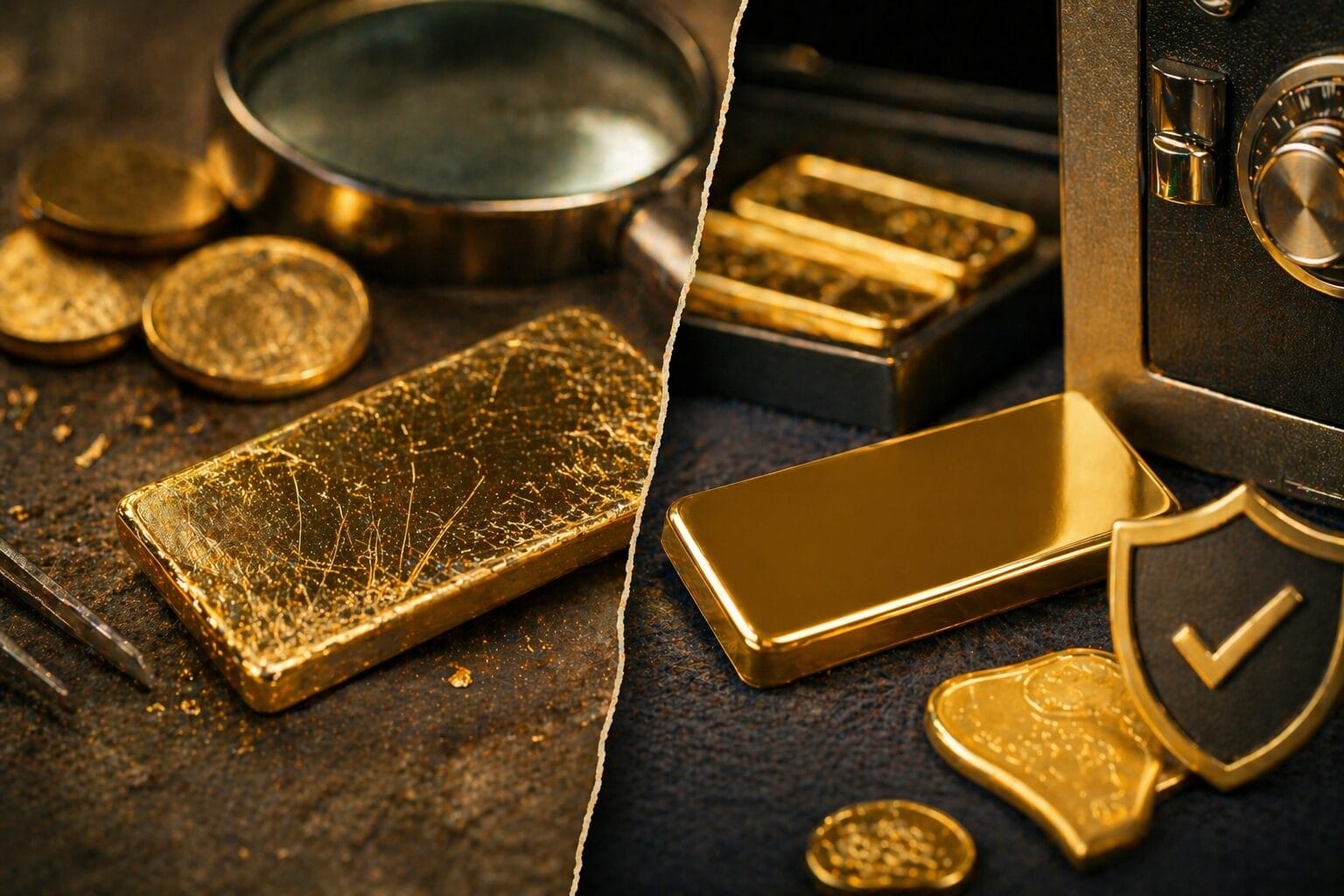

Table of Contents
- Introduction: A Nightmare That Can Be Avoided
- 1. The Harsh Reality: Pure Gold is Very Soft and Easily Damaged
- 2. The Difference in Policies: “No Mercy for You” vs. “No Problem at All”
- 3. Your Mandatory Question: “What Happens If I Sell Back Damaged Gold?”
- Conclusion: A Buy-Back Guarantee is Your Investment Insurance
Introduction: A Nightmare That Can Be Avoided
Imagine this scenario: you have been carefully saving a gold coin for several years. Its price has risen nicely, and you are smiling at your paper profits. The time has come to sell and enjoy the fruits of your investment. You walk confidently to the counter where you bought it. But after inspecting your gold, the officer says with a regretful tone, “I’m sorry, we can’t accept this. There’s a scratch here.” Suddenly, your profit vanishes and you are trapped with an asset that is difficult to sell. Your heart sinks.
This is not a fictional story. This is the harsh reality and the risk of damaged gold that is faced by many unwary investors. This issue stems from one factor that is often overlooked at the time of purchase: the gold buy-back guarantee. Many are so focused on the current price and the spread that they forget to ask about the most important thing—what happens if their asset is no longer perfect? Understanding the risk of damaged gold and how to protect yourself from it is the key to peace of mind in gold investment.
1. The Harsh Reality: Pure Gold is Very Soft and Easily Damaged
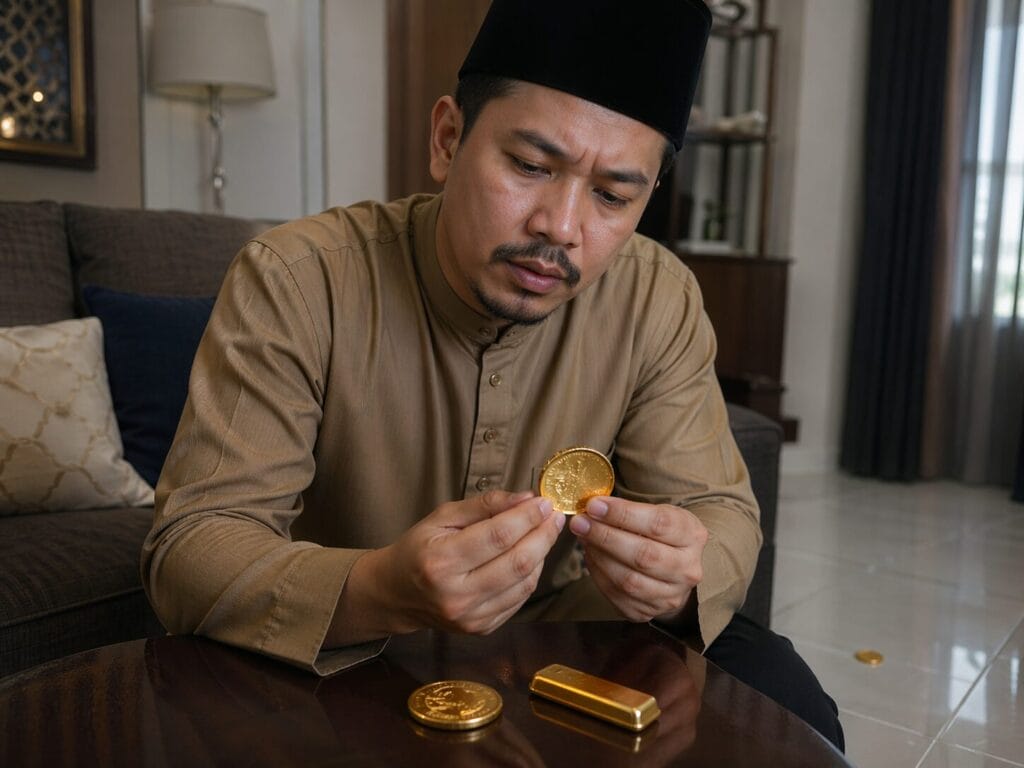
The first thing we need to understand and accept about the risk of damaged gold is that it is rooted in the physical properties of gold itself. We cannot deny science. We need to be realistic about how easily damage can occur, even if we are a very careful person. Understanding the natural properties of gold will help us to appreciate how important it is to choose the right seller, one who also understands this reality. This softness is the main reason the risk of damaged gold exists.
1. 24-Carat Gold is Not Iron or Steel
Gold with a purity of 999.9 (known as 24-carat) is a very soft metal. It does not have the hardness of iron, steel, or even copper. On the Mohs Hardness Scale (a scale to measure the hardness of minerals), pure gold only has a score of about 2.5, whereas a human fingernail has a score of 2.5 and a copper coin has a score of 3.5. This means that, theoretically, you could scratch the surface of pure gold using your own fingernail if you press hard enough.
The benefit of this softness is that it makes it easy for gold to be shaped into various beautiful and intricate designs. But its weakness from a storage perspective is that it is very easily scratched, scuffed, dented, or bent. If a gold coin is dropped from waist height onto a tiled floor, it will almost certainly suffer a dent on its rim. This is a physical fact that cannot be avoided. Understanding this inherent risk of damaged gold is the first step.
2. Damage Can Happen Accidentally and Beyond Your Control
You might be an extremely careful and meticulous person. You might store your gold in a special case and never take it out. But accidents can happen at any time. The gold might be dropped while you are showing it to a friend or a family member. Your young child might find it and bang it on a table. Or, as is most common, it might get scratched during the pawning process, where it needs to be tested and handled by a third party.
The benefit of understanding this reality is that you will be more careful in choosing a seller who also understands it. It is unfair for an investor to bear 100% of the risk of damaged gold that can happen accidentally. A good buy-back guarantee will take this factor of accidents into account. The issue of the buy-back guarantee starts from a basic understanding of this metal’s properties.
2. The Difference in Policies: “No Mercy for You” vs. “No Problem at All”
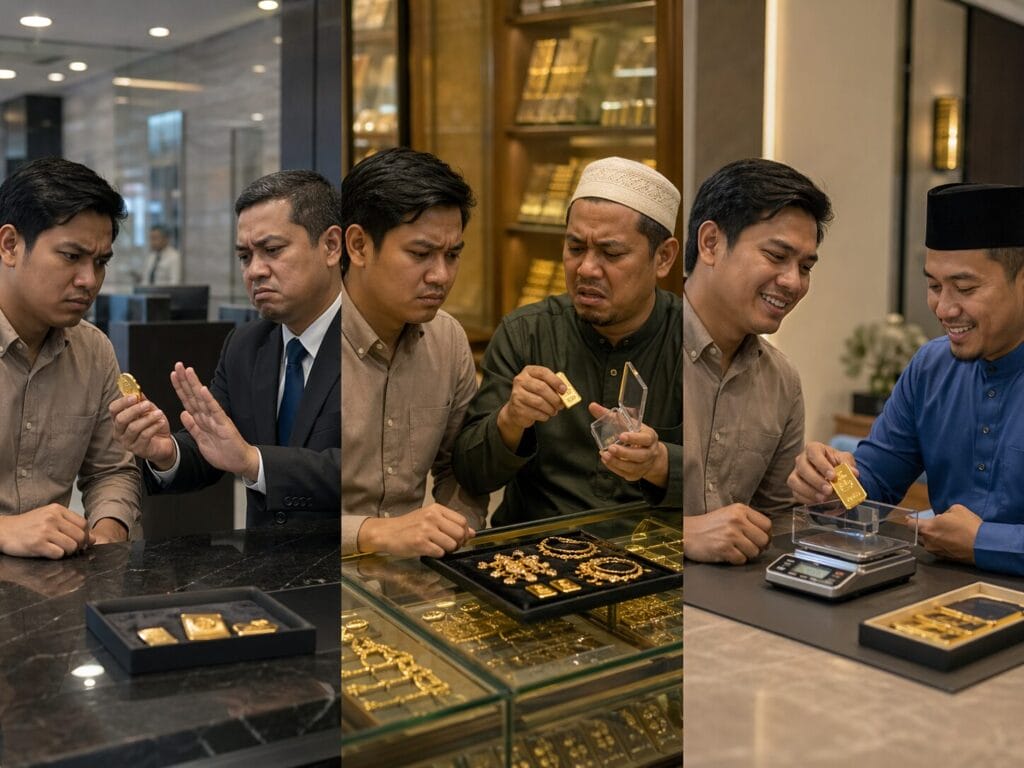
This is where the biggest and most critical difference between gold sellers lies. Their buy-back guarantee policies are vastly different and will determine the fate of your investment if any physical damage occurs. This difference is the core of the discussion about the risk of damaged gold. On one hand, we have policies that are extremely strict and do not favour the investor. On the other hand, we have policies that are more understanding and practical.
1. The Bank’s Policy: It Must Be in Perfect Condition (Zero Tolerance)
Banks in Malaysia (like Maybank for the Kijang Emas Coin) practise a “zero tolerance” policy towards any physical defects. They view their investment gold, especially coins, as “collector’s items” or numismatic products. Like an antique collector, they want items that are in perfect mint condition. If there is any physical defect, no matter how minor, they will refuse to buy it back. You will be left high and dry, forced to find another buyer at a much lower price. This policy exposes you to a very high risk of your asset becoming classified as damaged gold.
2. The Jewellery Shop’s Policy: The Value Will Be Severely Penalised
Traditional jewellery shops have a slightly different, but still detrimental, approach. If you buy a gold bar in a sealed plastic package from them and you open it, its value will drop severely. If it is scratched or dented, the outcome will likely be the same. They will consider it “second-hand gold” or scrap gold and will apply a much higher depreciation rate than the original one, possibly up to 25-30%. Their buy-back guarantee for damaged gold is often not transparent and can be arbitrary.
3. The Specialist Gold Company’s Policy: No Problem as Long as the Weight is the Same
A company that focuses on gold investment, such as Public Gold, has a very different and pro-investor policy. They understand that gold is an investment commodity, where its value lies in its weight and purity, not in its cosmetic perfection. Their buy-back guarantee policy clearly states: as long as the weight of the gold is the same, they will buy it back at the displayed price, even if it has scratches, dents, or bends.
The benefit of this policy is immense. It completely eliminates the risk of damaged gold from your investment. You can save with peace of mind. You can pawn it without worry. You truly own an asset whose value is guaranteed by its gold content, not by its cosmetic condition. A buy-back guarantee like this is the only one that makes sense for an investor. It removes the fear associated with handling damaged gold.
3. Your Mandatory Question: “What Happens If I Sell Back Damaged Gold?”

To protect yourself from getting trapped in a disappointing situation, you need to be a proactive and smart buyer. Don’t just ask about the price and the spread. The question about the buy-back guarantee for damaged gold is just as important, if not more so. Make this a part of your standard procedure before making any physical gold purchase. Asking costs you nothing, but not asking could cost you a fortune.
1. Make It a Part of Your Mandatory Checklist
Before making any purchase decision, ask the salesperson this direct and clear question: “What is your company’s policy if I want to sell this gold back but it has a small scratch?”. Listen carefully to their answer. Is their answer clear and confident, or do they hesitate? Their answer will reveal whether they are truly investor-friendly or not. This is the best litmus test to evaluate a seller’s credibility in managing the risk of damaged gold.
2. Ask for the Answer in Black and White (If Possible) and Do Your Research
If possible, get this buy-back guarantee policy in writing or refer to the official terms and conditions on their website. The benefit of this is that it gives you solid proof and confidence. Don’t just rely on the sweet promises or verbal words of a salesperson, because that salesperson might not be there in the future. Also, do a little research online. Read reviews or experiences from other customers. Are there many complaints about buy-back issues? Protecting yourself from the risk of damaged gold is your responsibility as an investor.
Conclusion: A Buy-Back Guarantee is Your Investment Insurance
Choosing a seller with a flexible and fair buy-back guarantee for damaged gold is like buying insurance for your gold investment. It is an incredibly important layer of protection that will give you peace of mind for many years to come. A slightly cheaper price or a slightly lower spread will mean nothing if your entire investment can be ‘wiped out’ because of a single small scratch. Think of the risk of damaged gold as part of the cost of your investment.
- Don’t let your hard-earned investment be at risk just because of a small, unintentional mistake. The risk of damaged gold is a reality that you must face by choosing a smart seller from the very beginning.
- Choose a seller who understands that the value of gold lies in its weight and purity, not in the perfection of its surface. That is the true secret to saving gold with absolute peace of mind and ensuring your investment is truly safe. A good buy-back guarantee for damaged gold is the pinnacle of a wise investment.
✨ WANT TO START SAVING IN GOLD?
With just RM100, you can begin your gold savings journey with Public Gold.
This is the perfect opportunity to build a stronger and more secure financial future.