

What happened to gold on 26 June 2026? Early in the session, it fell below USD4,000, and that was enough to make the market still look under pressure. But by the close, the direction had shifted again. The US dollar softened, Treasury yields eased, and gold managed to climb back near the top of its daily range.
- Introduction
- What Happened To Gold On 26 June 2026?
- What Is The Gold Chart Showing?
- Why Did Gold Move This Way?
- What Does This Mean For Malaysian Gold Savers?
- What Practical Action Makes More Sense?
- Conclusion
What Happened To Gold On 26 June 2026?
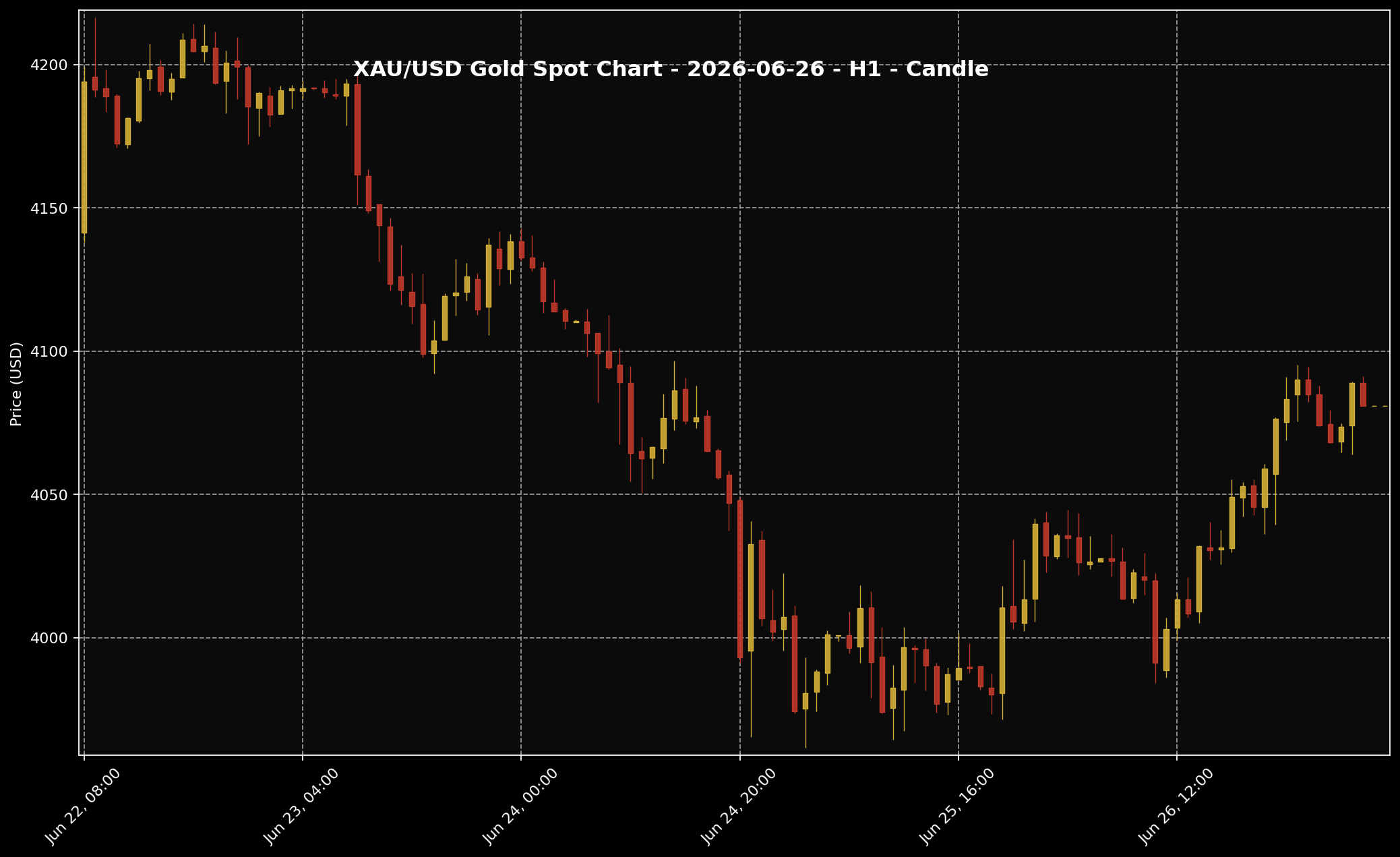 This chart shows the XAU/USD movement for the 26 June 2026 market session. Sifu Gold uses it as a visual reference, not a cue to buy emotionally.
1. Gold did not move in one clean direction on 26 June 2026. It started around the USD4,040 area, then came under pressure and briefly fell to roughly USD3,984. That part of the session mattered because it showed gold was still vulnerable when the market mood around US interest rates stayed cautious.
2. Later on, the tone improved. Buyers came back in, and the end-of-day reference reading showed gold around USD4,089.96 per troy ounce. That works out to about USD131.50 per gram. Using the same reading with USD/MYR around 4.08756, the converted global spot reference comes to roughly RM16,717.95 per troy ounce, or around RM537.49 per gram.
3. One point needs to stay very clear. These figures are global spot gold translated into Ringgit. They are not the same as local Malaysian physical gold retail prices. Local prices can still differ because of buy-sell spread, product premium, product type, and the way physical gold is priced in the local market.
What Is The Gold Chart Showing?
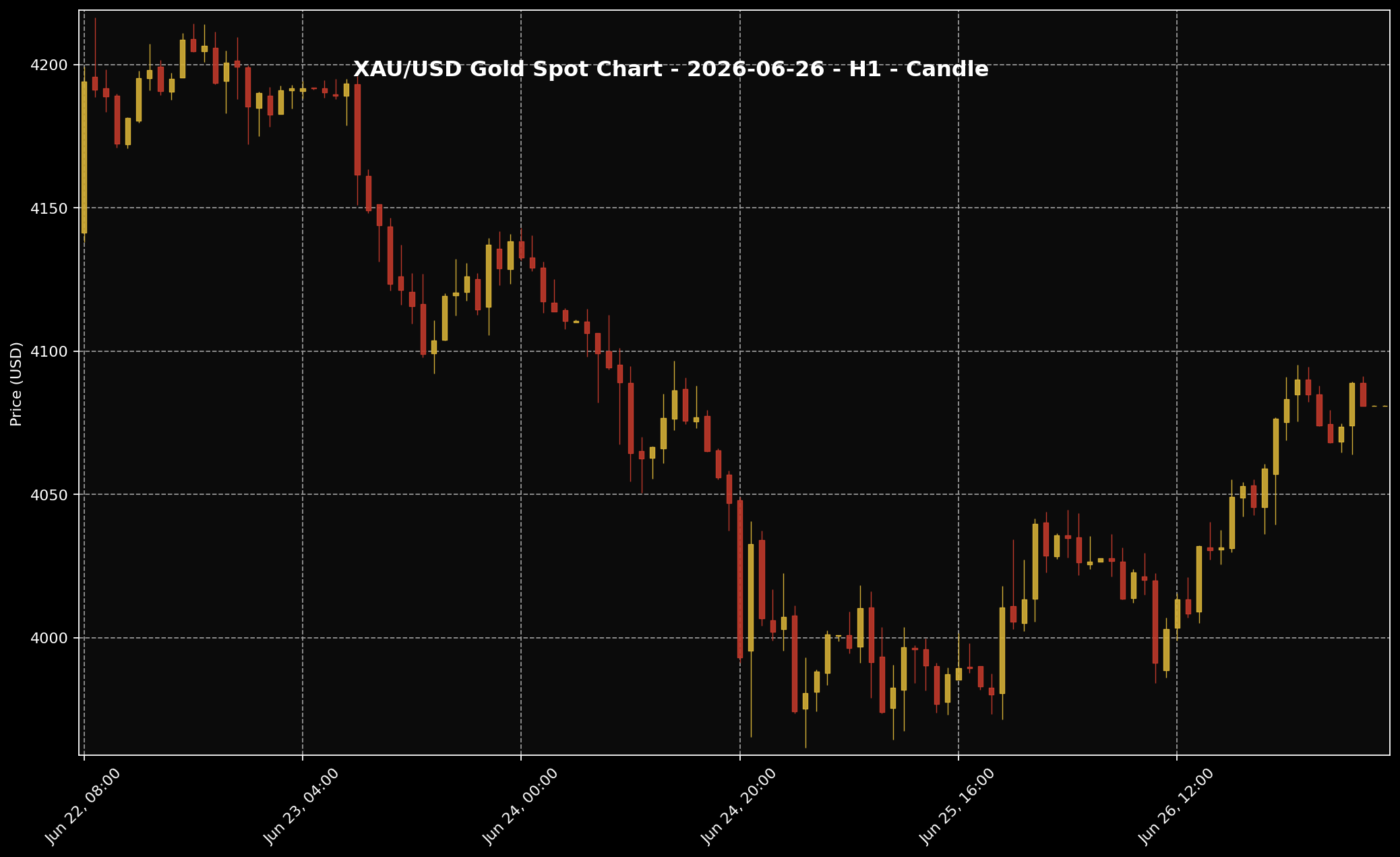 This chart helps readers see the gold price structure for the 26 June 2026 market session. It is used as market context, not as a trading signal.
1. If we read the chart as a simple market story, the structure of the day was quite straightforward. Gold was pushed lower first, broke below the USD4,000 area, and then recovered strongly into the later part of the session. So this was not a day where gold looked firm from the opening bell. It was a day where it had to absorb selling pressure first.
2. That rebound matters because it tells us buyers were still willing to step in once price moved into a lower zone. In other words, the market did not simply abandon gold after the dip. By the end of the session, price had snapped back close to the day’s higher zone near USD4,090.
3. Still, it is better not to overread that move. The safer chart reading is that this was an intraday rebound, not proof that the whole market had suddenly turned strong again. Gold improved by the close, yes, but the wider pressure behind the market had not fully disappeared.
Why Did Gold Move This Way?
 The US dollar is often one of the key factors influencing gold prices. When the dollar is firmer, gold can face more noticeable pressure.
1. The clearest explanation comes from two layers moving at the same time. First, there was the bigger macro backdrop. The Reuters-linked market direction still pointed to a broader weekly story where gold was under pressure because traders were reassessing the Fed rate outlook. That matters because when markets think US rates may stay high for longer, gold usually finds it harder to build lasting upside.
2. Second, there was the day’s own late-session relief move. Kitco’s coverage showed that a softer US dollar and lower US Treasury yields helped gold recover into the close. That makes sense in simple terms. Gold does not pay interest, so when bond yields ease and the dollar becomes less aggressive, gold gets a bit more room to breathe.
3. There was also support from a softer inflation-expectation tone later in the day, which helped cool some of the immediate rate pressure. But the key point is this: gold recovered because some short-term pressure faded, not because the whole Fed story had suddenly gone away. That is the balance readers need to keep in mind.
What Does This Mean For Malaysian Gold Savers?
 For Malaysian gold savers, the key point is not only whether prices rise or fall. What matters more is budget, discipline and a clear purpose.
1. For Malaysian gold savers, this session is a good reminder that looking at XAU/USD alone is never enough. Gold may rebound in US dollar terms, but what Malaysians feel locally can still look different once USD/MYR is brought into the picture. Currency movement can reduce or amplify the impact of a global gold move.
2. Using this session’s reference reading, the converted global spot reference was around RM537.49 per gram. That gives local readers a much clearer picture than USD alone, but it still needs context. It is only a Ringgit conversion of global spot gold. It is not a direct local shop price, and it is not the same thing as the price of physical gold products in Malaysia.
3. The practical lesson is simple. If gold rises in USD, do not assume local physical prices will move in exactly the same shape or at the same speed. You still need to account for USD/MYR, local spread, physical product premium, and retail pricing structure. That is why a one-day rebound should be understood properly before being turned into a personal buying conclusion.
What Practical Action Makes More Sense?
 When gold prices move quickly, better decisions usually come from disciplined planning, not panic reactions.
1. If you already have a gold-saving plan, this sort of session is a reminder that discipline usually matters more than reacting to one dramatic move. In the middle of the day, gold looked weak. By the end, it looked much healthier. That shift alone shows how quickly a one-day market story can change.
2. If gold is already part of your long-term savings plan and your budget is in a healthy position, gradual buying still makes more sense than trying to read every rebound as a perfect moment. There is no need to chase one stronger candle just because the session ended well. A better approach is to follow the plan you already trust and keep your commitments realistic.
3. If your budget still feels tight, then review cash flow first. Check monthly commitments, emergency savings, and how much you can genuinely set aside without strain. In a market that still carries bigger Fed-related pressure, it is wiser not to go in heavily all at once and not to commit the full budget at once. Gold saving should support your finances, not stretch them.
Conclusion
On 26 June 2026, gold fell below USD4,000, then rebounded strongly as the US dollar softened and Treasury yields eased. That rebound was real, but it still sat inside a broader market mood shaped by Fed rate expectations. For Malaysian readers, the more useful takeaway is to separate a one-day recovery from the bigger market direction, then let any next step follow budget, discipline, and a gradual long-term plan.