

What happened to gold on 28 June 2026? This was not a session where gold suddenly broke higher, and it was not a day of heavy selling either. The market mostly paused near a high price area and waited for a fresh reason to move. Spot gold closed around USD4,080.80 per troy ounce, or about USD131.20 per gram. With USD/MYR near 4.08718, that works out to roughly RM16,678.95 per troy ounce or RM536.24 per gram. One thing matters here: this is a global spot conversion, not the same thing as local physical gold pricing in Malaysia.
- Introduction
- What Happened To Gold On 28 June 2026?
- What Is The Gold Chart Showing?
- Why Did Gold Move This Way?
- What Does This Mean For Malaysian Gold Savers?
- What Practical Action Makes More Sense?
- Conclusion
What Happened To Gold On 28 June 2026?
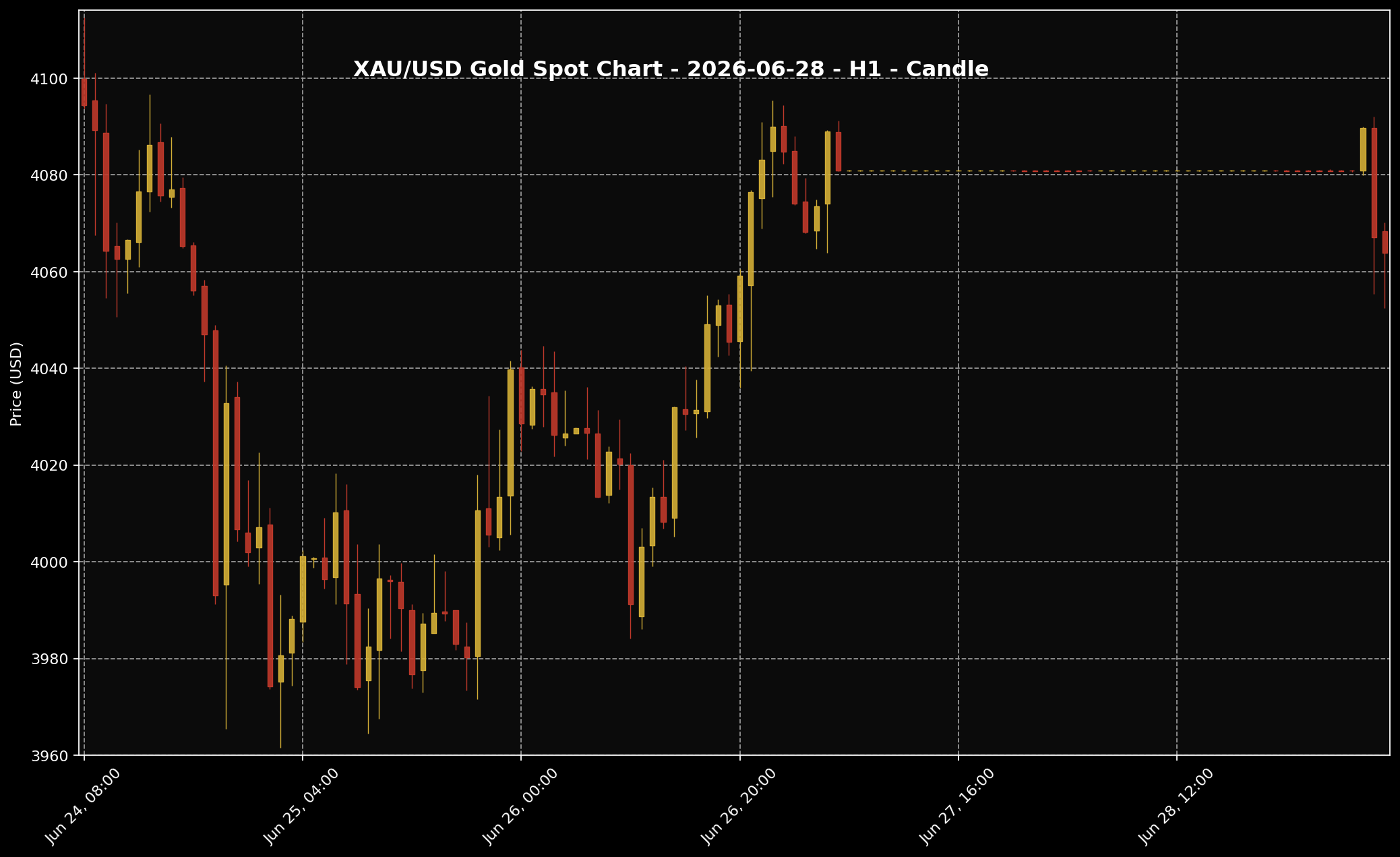 This chart shows the XAU/USD movement for the 28 June 2026 market session. Sifu Gold uses it as a visual reference, not a cue to buy emotionally.
1. Gold was almost flat on 28 June 2026. That is the cleanest way to read the day. The market did not get a strong enough new trigger to push prices sharply higher, but sellers also did not manage to pull gold much lower. So the session ended up looking more like a pause than a decisive move.
2. The approved price snapshot for the market date shows gold closing around USD4,080.80 per troy ounce. In gram terms, that was around USD131.20. Once translated into Ringgit using USD/MYR near 4.08718, the same global spot reference comes to about RM16,678.95 per troy ounce or RM536.24 per gram.
3. The bigger story, then, was not a change in direction. It was the fact that gold stayed near an elevated zone, but without enough fresh momentum to break away from it.
What Is The Gold Chart Showing?
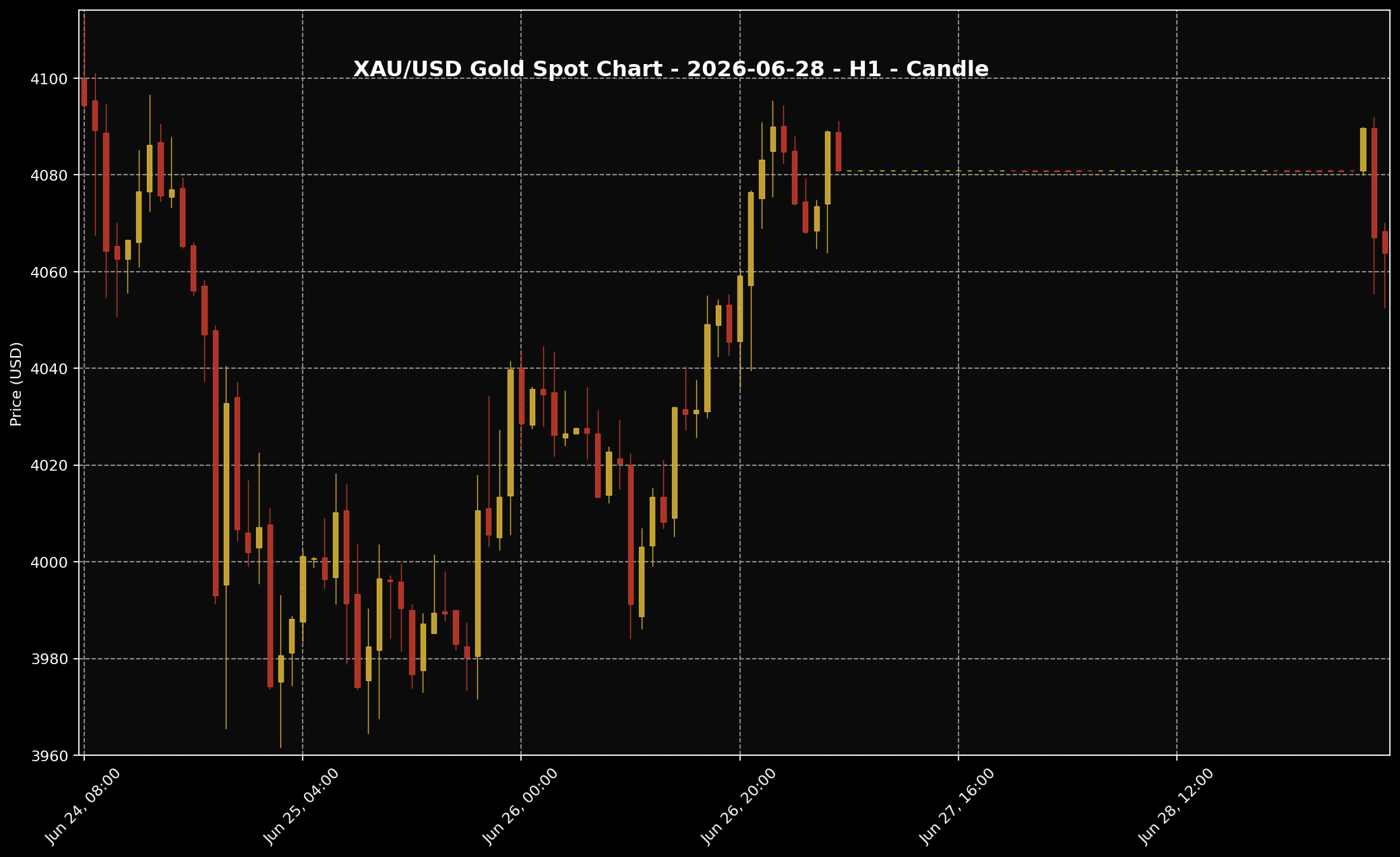 This chart helps readers see the gold price structure for the 28 June 2026 market session. It is used as market context, not as a trading signal.
1. If we look at the final part of the session, the chart shows a very tight range. The last H1 candle sat with a high near USD4,081.01 and a low near USD4,080.76. That is a very small gap, and it usually tells us the market is holding its ground rather than making a bold move.
2. Put simply, this looks like narrow consolidation near a high area. Buyers were still there, because the price did not fall far. But they also did not show enough fresh strength to push gold into a clear new leg higher. At the same time, sellers were not strong enough to take control either.
3. That is why this chart should be read as a waiting session. Not a breakout. Not a proper reversal. Just a market that was still gathering clues before deciding what to do next.
Why Did Gold Move This Way?
 The US dollar is often one of the key factors influencing gold prices. When the dollar is firmer, gold can face more noticeable pressure.
1. The main reason is simple: the market still did not have a fresh catalyst. Gold remains sensitive to the usual macro backdrop, especially the US dollar, US Treasury yields, and expectations around Federal Reserve interest rates. Those factors still matter. But on 28 June itself, there was no strong new development to change the tone in a major way.
2. When the US dollar is not making a big move, Treasury yields are not giving the market a new surprise, and rate expectations still sit in the same broad frame, gold often loses the reason to move aggressively. That does not mean the market has become unimportant. It just means the usual pressure points were still in the background without producing a clear new push.
3. So this was more of a cautious holding pattern. Gold did not lose support in a dramatic way, but it also did not get the sort of fresh boost that would make traders chase it much higher. That is why the session stayed so narrow.
What Does This Mean For Malaysian Gold Savers?
 For Malaysian gold savers, the key point is not only whether prices rise or fall. What matters more is budget, discipline and a clear purpose.
1. For Malaysian gold savers, looking at XAU/USD alone is never enough. Gold is priced globally in US dollars, but what local readers feel is also shaped by USD/MYR. So even when the global session looks quiet, the Ringgit translation still matters if you want a more realistic picture of where gold stands from a Malaysia point of view.
2. For this session, the converted global spot reference was around RM536.24 per gram. That gives readers a more useful anchor than USD alone, because it brings the discussion closer to local thinking and personal budgeting.
3. But one point must stay clear. A global spot conversion in Ringgit is not the same as the local retail price of physical gold in Malaysia. Local prices can differ because of product premiums, buy-sell spreads, exchange-rate effects, product type, and local pricing structure. So this number is best used as a market guide first, not as a direct shop price.
What Practical Action Makes More Sense?
 When gold prices move quickly, better decisions usually come from disciplined planning, not panic reactions.
1. When gold moves like this, it usually makes less sense to react to one quiet day and more sense to review your plan. A flat session near a high price area does not automatically mean you need to rush in, and it does not automatically mean the opportunity has gone either. It simply means the market has not shown a fresh direction yet.
2. If you already have a disciplined gold-saving plan, gradual buying still makes more sense than trying to guess the perfect day. Gold can stay elevated for longer than many people expect, and it can also dip briefly before moving again. That is why consistency often matters more than trying to time every short-term move.
3. If your budget is not ready, there is nothing wrong with waiting and building cash first. If your budget has already been set aside, smaller regular purchases are usually easier to manage than committing the full budget at once. The practical goal is not to be the fastest. It is to stay disciplined and stick to a plan you can actually sustain.
Conclusion
In the end, 28 June 2026 was a day where gold stayed firm but did not find a fresh reason to move decisively. Spot gold closed around USD4,080.80 per troy ounce, which translates to roughly RM536.24 per gram at the approved USD/MYR reference. For Malaysian gold savers, the more useful takeaway is not to overreact to a quiet session, but to understand the difference between global spot gold and local physical pricing, then make decisions based on budget, discipline, and a step-by-step saving plan.