

What happened to gold on 29 June 2026? Put simply, gold looked firm early in the session, but that strength did not last. Price pushed a little higher at first, then came under pressure and ended the day well below its opening zone before steadying late in the session. For Malaysian gold savers, the more useful question is not just that gold closed lower. It is why that early strength faded, and what the same move looks like once it is translated into Ringgit.
- Introduction
- What Happened To Gold On 29 June 2026?
- What Is The Gold Chart Showing?
- Why Did Gold Move This Way?
- What Does This Mean For Malaysian Gold Savers?
- What Practical Action Makes More Sense?
- Conclusion
What Happened To Gold On 29 June 2026?
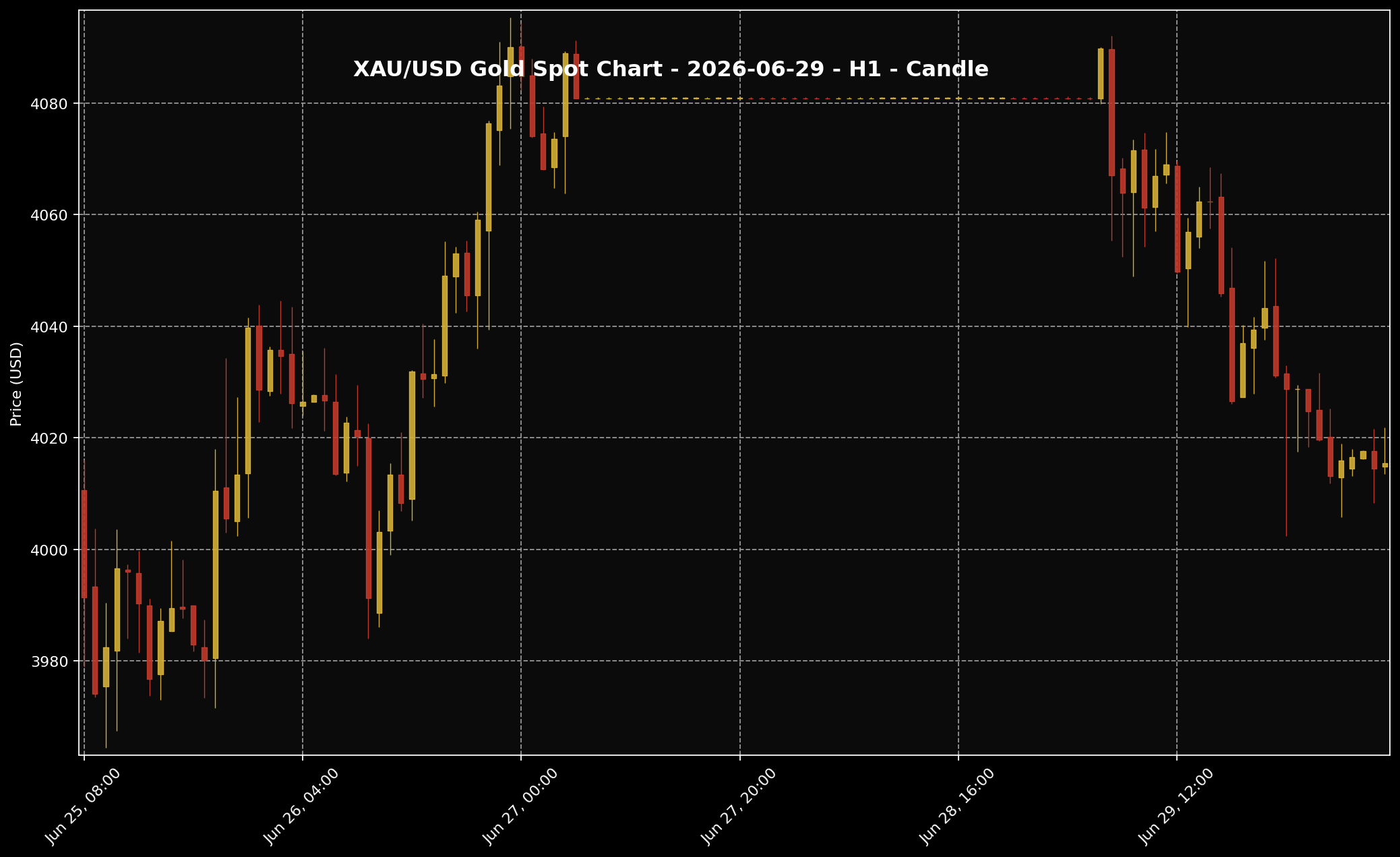 This chart shows the XAU/USD movement for the 29 June 2026 market session. Sifu Gold uses it as a visual reference, not a cue to buy emotionally.
1. On 29 June 2026, gold closed the approved snapshot at around USD4,028.80 per troy ounce. That works out to about USD129.53 per gram. Using the approved USD/MYR reading of roughly 4.07108, the same global spot reference comes to around RM16,401.55 per troy ounce, or about RM527.32 per gram.
2. One thing needs to stay clear from the start. This is the global spot price translated into Ringgit, not the same thing as a local physical gold retail price. The bigger story that day was the shape of the move itself. Gold started the session at a high level, managed to climb a little further, then gave back that advantage as the market lost momentum. By the close, the price was still well below where the day had started.
What Is The Gold Chart Showing?
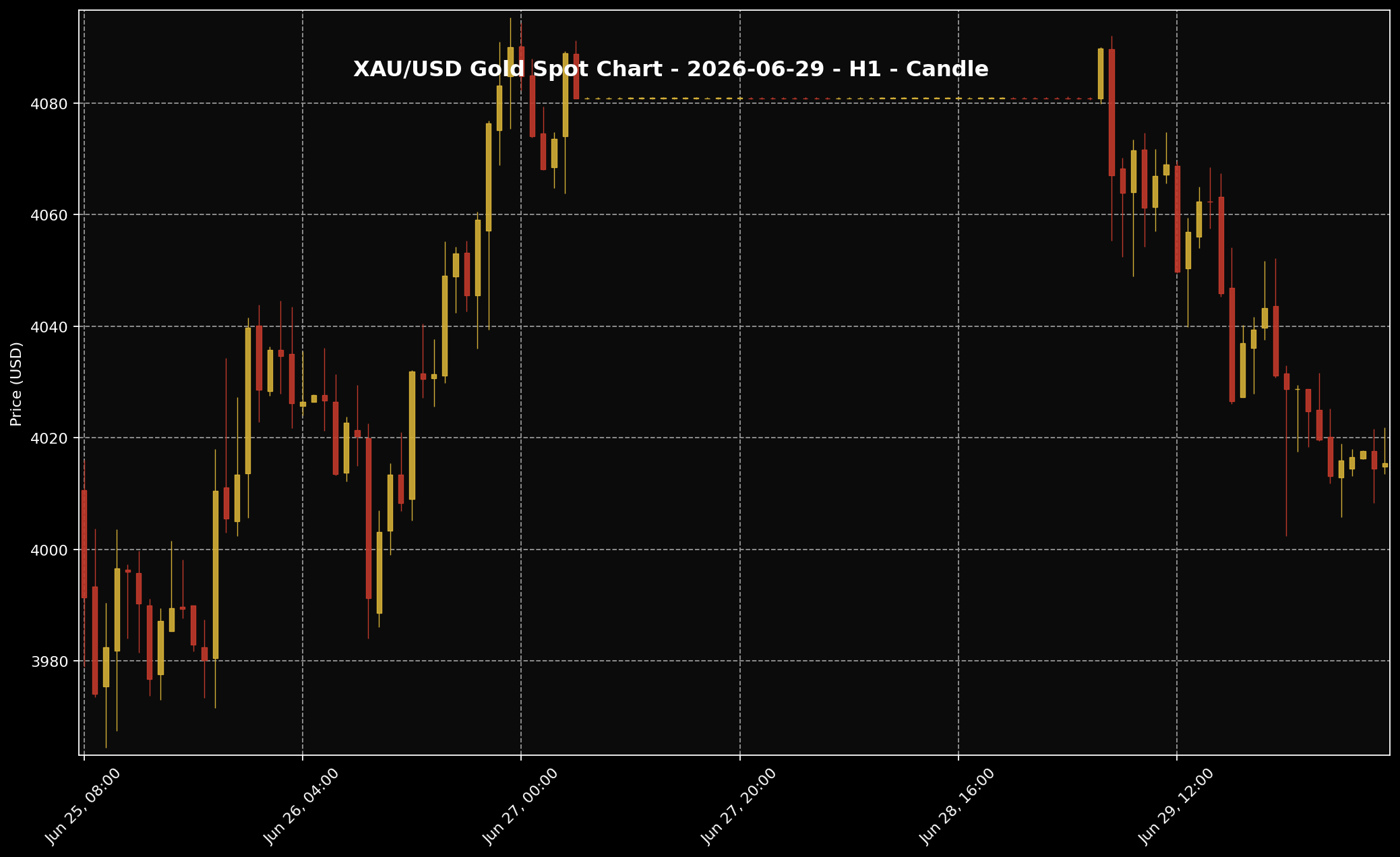 This chart helps readers see the gold price structure for the 29 June 2026 market session. It is used as market context, not as a trading signal.
1. If we look at the H1 chart, the structure is fairly easy to read. The early candles still showed buying interest and were enough to push gold into its daily high zone. But once that upper area failed to hold, the mood changed. Price began to slide in stages rather than collapse all at once.
2. That matters because it tells us this was not simply a flat or directionless session. Gold did try to stay strong earlier in the day, but the market could not keep that strength in place. There was some late stabilisation after the drop towards the USD4,002 area, yet the rebound was not strong enough to carry gold back to its opening zone. So the cleaner reading here is simple: gold lost intraday height, then steadied, but never fully recovered the earlier tone.
Why Did Gold Move This Way?
 The US dollar is often one of the key factors influencing gold prices. When the dollar is firmer, gold can face more noticeable pressure.
1. For this session, the safest explanation comes from the price behaviour itself. When gold begins high, reaches a fresh intraday top, and still fails to hold that area, it usually means the market does not have enough fresh support to keep pushing higher. In other words, the early strength was there, but it was not strong enough to last through the whole session.
2. At the same time, the market was also watching Middle East / Gulf tensions, which added to inflation worries and kept attention on the direction of US interest rates. When that kind of mood returns, gold can lose support even after looking firm early in the session.
3. That is why the story on 29 June 2026 is better described as a loss of momentum than a full change in long-term direction. Sellers gradually became more dominant as the day went on, while buyers only managed to slow the fall near the end. For readers, the key point is not to overcomplicate it. Gold did not suddenly break down from the first hour, but it also did not show the kind of follow-through that would have kept the market comfortably near the top of the range.
What Does This Mean For Malaysian Gold Savers?
 For Malaysian gold savers, the key point is not only whether prices rise or fall. What matters more is budget, discipline and a clear purpose.
1. For Malaysian gold savers, looking at XAU/USD alone is never enough. Gold may move in US dollar terms, but what you feel locally also depends on the Ringgit. That is why the translated figure of around RM527.32 per gram is useful. It gives a clearer picture of where the global spot market sits from a Malaysian budgeting point of view.
2. Still, that Ringgit figure should not be treated as a direct shop price for physical gold in Malaysia. Local pricing can differ because of product premium, spread, product type, operational cost, and the way physical gold is priced in the local market. So the more useful habit is this: use the global spot move to understand market direction, then separate that from the actual physical price you may be offered locally. That distinction helps readers avoid reacting too quickly to one day of price action.
What Practical Action Makes More Sense?
 When gold prices move quickly, better decisions usually come from disciplined planning, not panic reactions.
1. If you already have a gold-saving plan, a session like this is usually a reminder to stay disciplined rather than react emotionally. Gold is still at a high level overall, but the intraday move shows that price can swing meaningfully within a single session. That is exactly why it makes sense to check your budget first instead of chasing one move because you feel you might miss out.
2. A more practical approach is to break purchases into stages if that already fits your saving method. Review your available cash, understand the difference between global spot and local physical pricing, and make sure any purchase does not disturb your monthly commitments. The goal is not to guess the perfect day. The goal is to stay consistent with a plan that you can actually maintain over time. For most savers, that matters more than trying to respond heavily to one session that started strong but faded later.
Conclusion
In the end, the story on 29 June 2026 was fairly simple. Gold looked strong early, but it could not hold that advantage through the rest of the session. For Sifu Gold readers, the more useful takeaway is to read the market clearly, translate the global price properly into Ringgit, and keep decisions tied to budget and discipline rather than one day of shifting momentum.