

What happened to gold on 1 July 2026? It did try to recover as the new quarter began, but the move never looked fully comfortable. A firmer US dollar, higher US Treasury yields, and caution ahead of the US jobs report were still keeping the market on guard. So for Malaysian gold savers, the real story was not just that gold bounced a little. It was why that rebound stayed limited, and what the same global move actually looks like once it is translated into Ringgit.
- Introduction
- What Happened To Gold On 1 July 2026?
- What Is The Gold Chart Showing?
- Why Did Gold Move This Way?
- What Does This Mean For Malaysian Gold Savers?
- What Practical Action Makes More Sense?
- Conclusion
What Happened To Gold On 1 July 2026?
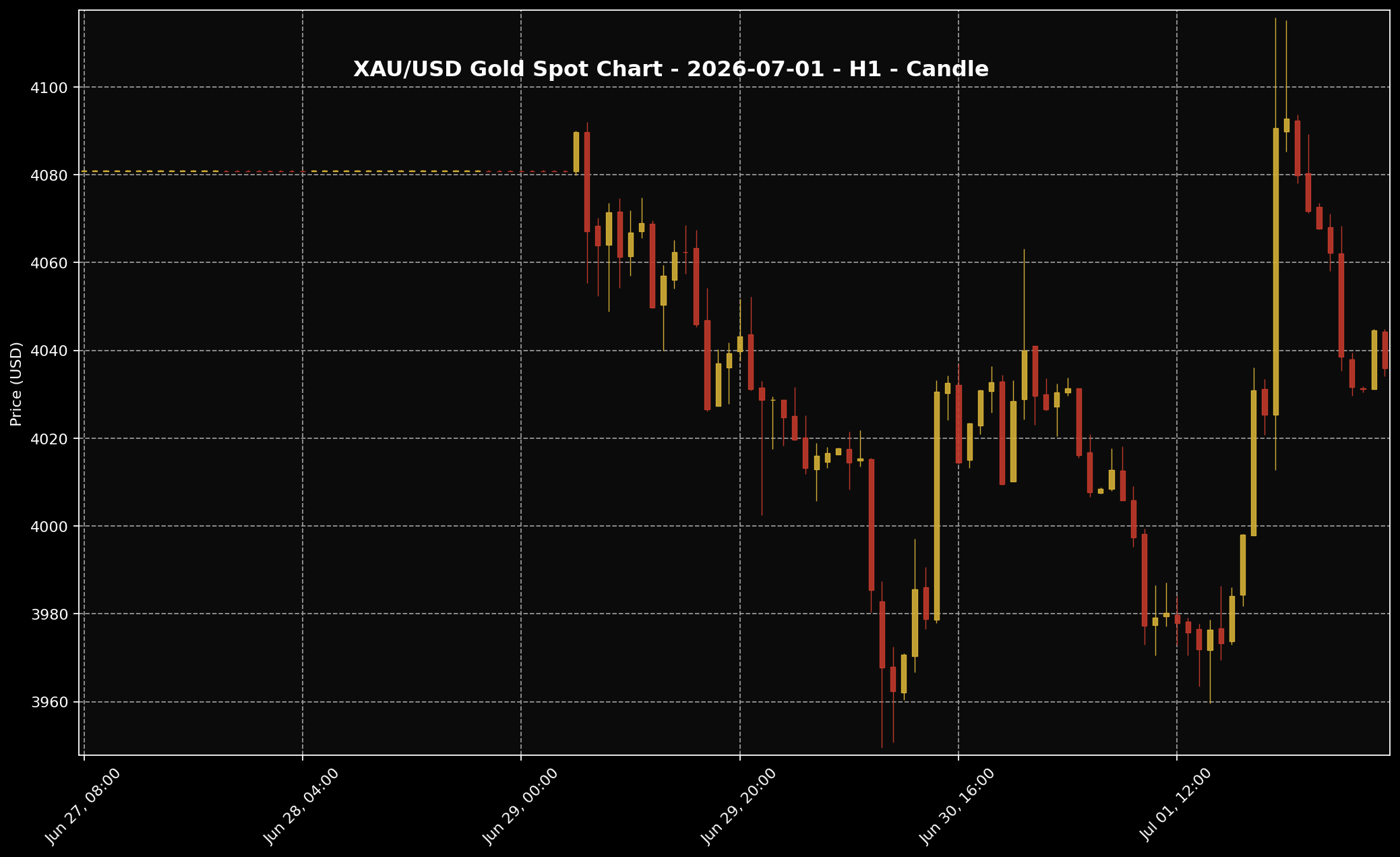 This chart shows the XAU/USD movement for the 1 July 2026 market session. Sifu Gold uses it as a visual reference, not a cue to buy emotionally.
1. Gold started to look a little firmer on 1 July 2026, but this was not a clean breakout. Kitco’s coverage from the session pointed to a rebound attempt as traders covered short positions near an important support area. In plain English, some buyers did step back in after earlier pressure.
2. But that rebound still had limits. The same session was being held back by a firm US dollar and higher Treasury yields, which meant the market was not ready to let gold run freely. Reuters-linked headlines from the day pointed in the same direction, with Treasury yields and the Fed rate outlook still weighing on sentiment.
3. By the approved end-of-session snapshot, spot gold was around USD4,079.92 per troy ounce, or about USD131.17 per gram. When translated into Ringgit using USD/MYR around 4.09419, that works out to roughly RM16,703.95 per troy ounce, or around RM537.04 per gram. That tells us gold did manage to recover part of its earlier weakness. Still, the move looked more like a controlled rebound than a strong new upward phase.
What Is The Gold Chart Showing?
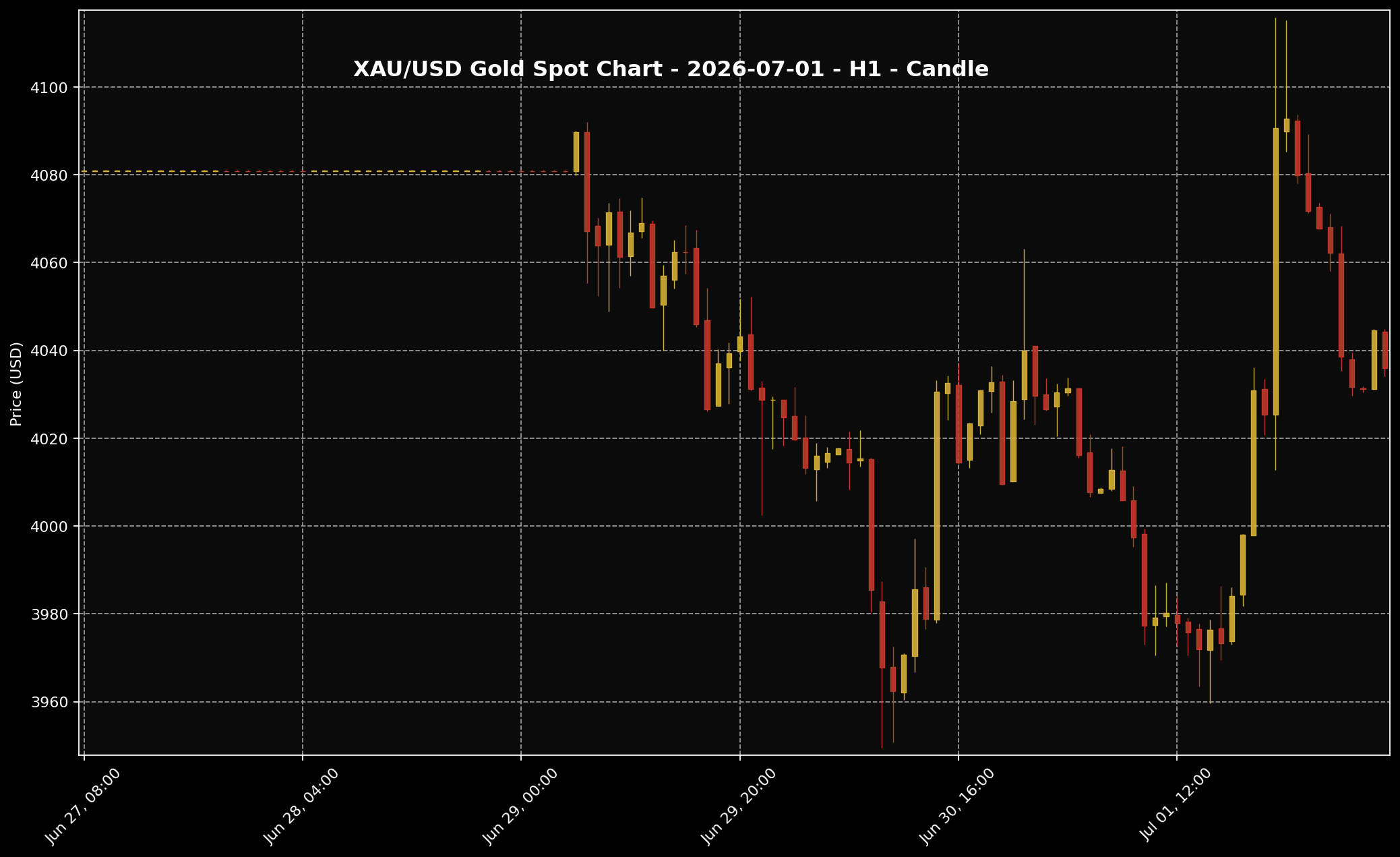 This chart helps readers see the gold price structure for the 1 July 2026 market session. It is used as market context, not as a trading signal.
1. If we keep the chart reading simple, the message is fairly clear. Gold came under pressure first, then found support and worked its way back up into the close. That fits the wider story from the day: buyers were still present, but they were operating inside a market that remained cautious.
2. The more useful way to describe the structure is this: gold was trying to stabilise, not breaking out with conviction. The recovery was real, but it did not carry the kind of strong follow-through that would make the market look fully comfortable again.
3. So this was not really a chart saying the pressure had disappeared. It was showing a rebound attempt inside a session that still had macro pressure in the background. That is a helpful distinction, especially for readers who want to understand direction without turning every price move into a trading signal.
Why Did Gold Move This Way?
 The US dollar is often one of the key factors influencing gold prices. When the dollar is firmer, gold can face more noticeable pressure.
1. The main explanation comes from three things moving together. First, the US dollar remained firm. When the dollar stays strong, gold often finds it harder to build momentum because it becomes less appealing for buyers using other currencies.
2. Second, US Treasury yields were still elevated. Gold does not pay interest, so when bond yields stay high, some money in the market naturally leans towards income-producing assets instead. That does not always force gold sharply lower, but it can make rebounds look more fragile and easier to stall.
3. Third, the market was already watching the upcoming US payrolls report. Big jobs data can shift expectations around the Fed and interest rates quite quickly. That is why traders were careful. Gold was able to recover, yes, but the market was not ready to treat one rebound session as proof that the bigger rate-and-yield pressure story had gone away.
What Does This Mean For Malaysian Gold Savers?
 For Malaysian gold savers, the key point is not only whether prices rise or fall. What matters more is budget, discipline and a clear purpose.
1. For Malaysian gold savers, looking at XAU/USD alone is never enough. Once the same global spot price is translated into Ringgit using USD/MYR around 4.09419, gold comes to roughly RM16,703.95 per troy ounce, or around RM537.04 per gram. That makes the move easier to relate to locally.
2. But one thing needs to stay clear. That figure is a global spot conversion into Ringgit. It is not the same as local physical retail gold pricing in Malaysia. Local prices can still differ because of product premiums, buy-sell spreads, product type, exchange-rate effects, and other local cost factors.
3. So if global gold looks as if it is recovering, but local physical pricing still feels high, that is not a contradiction. It simply means you are looking at two different layers. The global market gives the direction. The local physical market adds its own pricing structure on top.
What Practical Action Makes More Sense?
 When gold prices move quickly, better decisions usually come from disciplined planning, not panic reactions.
1. The more practical response here is still discipline. If you already have a gold-saving plan, this kind of session is usually more useful as a reminder to stay with your structure than as a reason to react to one day’s rebound. A better-looking close does not automatically mean the wider pressure has disappeared.
2. If your approach is gradual buying, that still makes sense in a market like this. Most ordinary savers are not trying to catch every short-term move perfectly. They are trying to build their gold savings steadily while keeping their monthly budget under control.
3. If you are still deciding whether to start or add more, review your budget first. Make sure your cash flow, commitments, and emergency buffer are properly covered. And if the market still feels mixed, do not go in heavily all at once or commit the full budget at once just because gold appears to be recovering. A smaller and more structured step is usually the safer choice.
Conclusion
The main story on 1 July 2026 was not that gold had suddenly turned strong again. It was that gold tried to recover, but the market was still being held back by a firm US dollar, elevated Treasury yields, and caution ahead of the US payrolls report. For Malaysian gold savers, the better takeaway is to understand that bigger backdrop, keep the Ringgit context in view, and make decisions that still fit a realistic long-term savings plan.