

What happened to gold on 3 July 2026? The main story was quite clear. Gold moved higher and managed to stay firm after weaker US jobs data changed the market mood. When data like that comes in softer than expected, traders usually start rethinking how aggressive the Fed can really be on interest rates. That matters because it can ease pressure from the US dollar and Treasury yields. For Malaysian gold savers, the useful question is not just whether gold went up, but why it went up and what that price move really looks like once it is translated into Ringgit.
- Introduction
- What Happened To Gold On 3 July 2026?
- What Is The Gold Chart Showing?
- Why Did Gold Move This Way?
- What Does This Mean For Malaysian Gold Savers?
- What Practical Action Makes More Sense?
- Conclusion
What Happened To Gold On 3 July 2026?
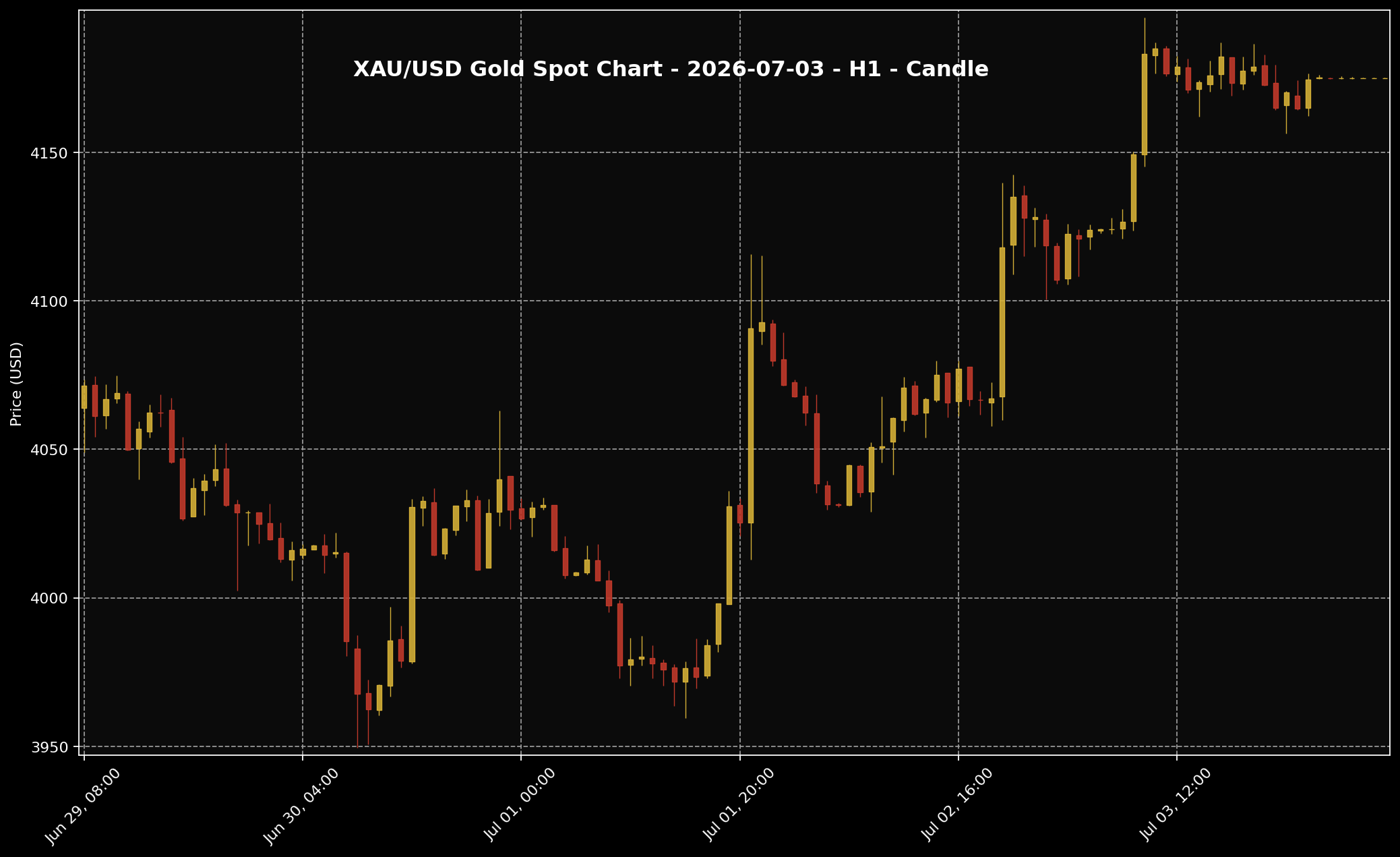 This chart shows the XAU/USD movement for the 3 July 2026 market session. Sifu Gold uses it as a visual reference, not a cue to buy emotionally.
1. By the last hourly snapshot of the 3 July 2026 session, global spot gold was around USD4,164.72 per troy ounce. Broken down further, that was about USD133.90 per gram. Using the same approved USD/MYR reference of 4.07089, the Ringgit conversion came to roughly RM16,954.13 per troy ounce, or about RM545.09 per gram.
2. That gives Malaysian readers the fuller picture straight away. But one thing needs to stay clear: these are global spot gold figures converted into Ringgit, not local retail physical gold prices in Malaysia. Local physical pricing can still sit higher because of product premiums, buy-sell spread, operating costs, and the way local sellers structure their prices.
3. The other important point is that gold did not just jump for a moment and then lose everything again. It held near the upper part of the session by the close of the reference snapshot. That usually tells us the support behind the move was not random noise.
What Is The Gold Chart Showing?
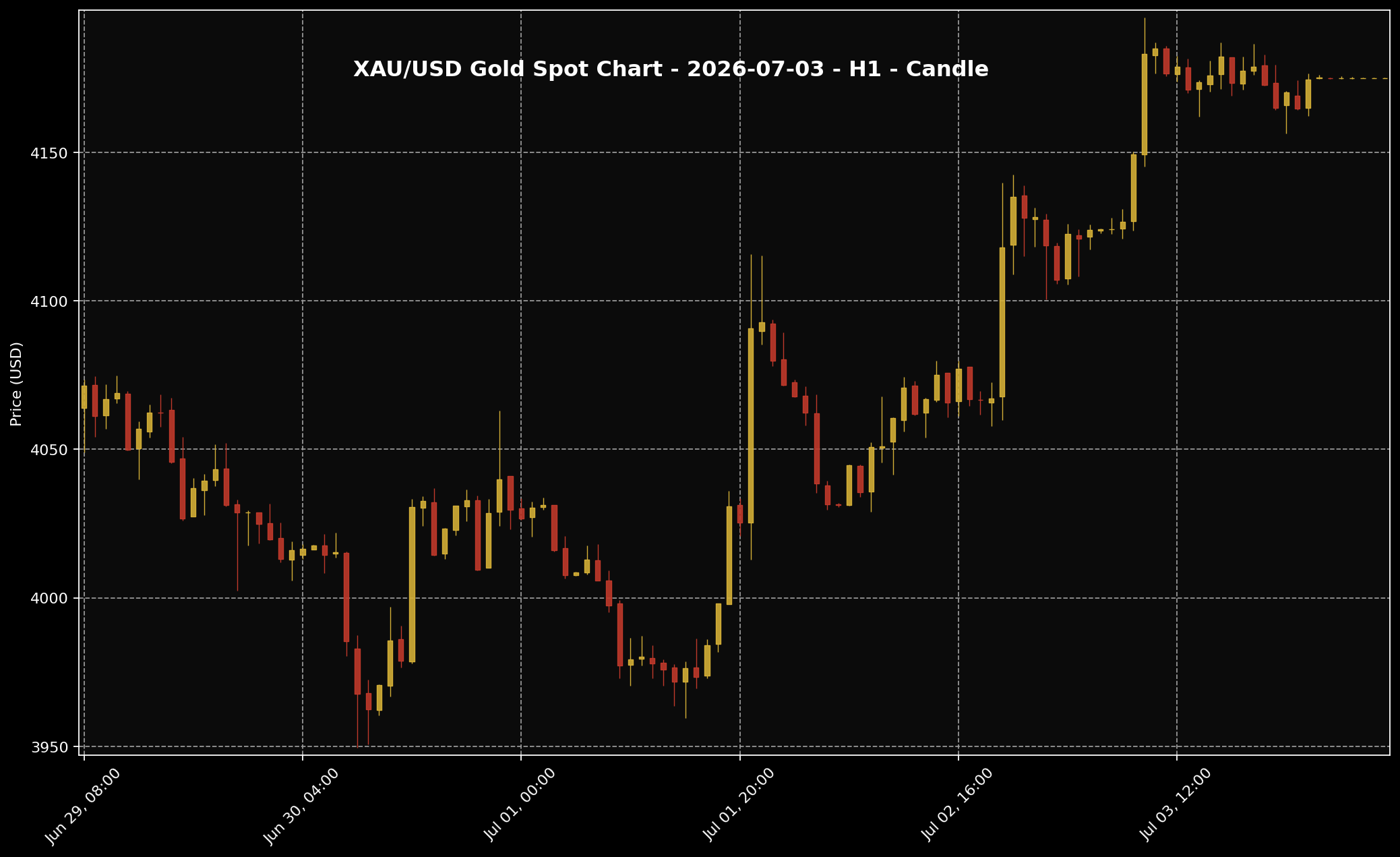 This chart helps readers see the gold price structure for the 3 July 2026 market session. It is used as market context, not as a trading signal.
1. If we keep the chart reading simple, the H1 structure for 3 July looked stronger than the previous session. Gold pushed higher quite clearly, then stayed active near the upper area instead of falling straight back down.
2. There was still some pullback after the move. It was not a straight line higher all day. A few candles showed the pace slowing, which is normal after a sharp reaction. But that pullback did not wipe out the session’s main gain. The market still finished in a firm position.
3. Put simply, this looked more like a gain that held rather than a brief spike that disappeared. For a Sifu Gold article, that is enough chart context. We do not need heavy technical analysis to explain the day properly.
Why Did Gold Move This Way?
 The US dollar is often one of the key factors influencing gold prices. When the dollar is firmer, gold can face more noticeable pressure.
1. The main trigger was weaker US jobs data. Once the labour numbers came in softer, the market began to dial back some of its more aggressive rate expectations. That matters because gold is very sensitive to the US rate story.
2. When traders think the Fed may not need to stay as aggressive, two things often happen quite quickly. The US dollar can lose some strength, and Treasury yields can ease. That combination tends to help gold. A firmer dollar usually makes gold harder to support, while higher bond yields raise the opportunity cost of holding a non-yielding asset like gold.
3. So the real story here was not just “gold went up”. The bigger point was that the market saw softer US data, adjusted its rate expectations, and then took some pressure off gold through the dollar and bond-yield channel. That fits the broader direction seen in the daily evidence layer as well: weaker jobs data helped calm some of the more aggressive rate-hike thinking.
What Does This Mean For Malaysian Gold Savers?
 For Malaysian gold savers, the key point is not only whether prices rise or fall. What matters more is budget, discipline and a clear purpose.
1. For Malaysian gold savers, this is a good reminder that US data can still affect what we feel locally in Ringgit. The trigger may start in America, but the impact does not stay there. Once global spot gold moves and USD/MYR is brought into the picture, the local price feeling can change quite quickly.
2. At around RM545.09 per gram on this global spot conversion, many readers will naturally feel that gold already looks expensive. That reaction is understandable. But it is still important not to confuse that converted spot figure with the actual price of local physical gold products. Retail prices in Malaysia can remain higher because they include spread, premium, and other local pricing factors.
3. The key takeaway is that Malaysian readers need to watch two layers at the same time. First, what is happening to global spot gold. Second, how that same move translates into Ringgit. If both layers are not helping buyers, local gold can still feel costly even when the global story sounds straightforward.
What Practical Action Makes More Sense?
 When gold prices move quickly, better decisions usually come from disciplined planning, not panic reactions.
1. If you already have a proper gold-saving plan, it usually makes more sense to stick to your budget and continue in stages rather than chase one strong session. A one-day move can look exciting, but that does not automatically mean every buyer should rush in at the same pace.
2. If you have not started yet, this kind of session is still useful because it shows how fast sentiment can shift when the market changes its view on US rates, the dollar, and bond yields. That is exactly why it is better not to commit the full budget at once. A more sensible approach is to decide your amount first, then spread purchases according to what you can genuinely afford.
3. The main goal is not to catch every move perfectly. For most savers, consistency matters more than trying to outguess every short-term price reaction. Gold saving works better when the method is disciplined, the budget is clear, and the decision is not driven by one emotional day in the market.
Conclusion
In short, 3 July 2026 was a session that favoured gold because weaker US jobs data eased pressure from the US dollar and Treasury yields. Gold did not only rise during the session. It also held firm into the close of the reference snapshot. For Malaysian gold savers, the practical message is simple: understand what moved the market, remember that global spot gold is not the same as local physical retail pricing, and follow a saving plan that fits your real budget rather than reacting to one strong day alone.