

What happened to gold on 6 July 2026? It did not break down badly, but it also could not hold the stronger tone it showed earlier in the session. Gold had some support in the background, yet that support was not strong enough to keep the move going once the US dollar firmed up again. The market was also waiting for the Fed minutes, and that caution showed up in the price action. For Malaysian gold savers, the more useful question is not just where gold closed, but what that same move looked like once it was translated into Ringgit.
- Introduction
- What Happened To Gold On 6 July 2026?
- What Is The Gold Chart Showing?
- Why Did Gold Move This Way?
- What Does This Mean For Malaysian Gold Savers?
- What Practical Action Makes More Sense?
- Conclusion
What Happened To Gold On 6 July 2026?
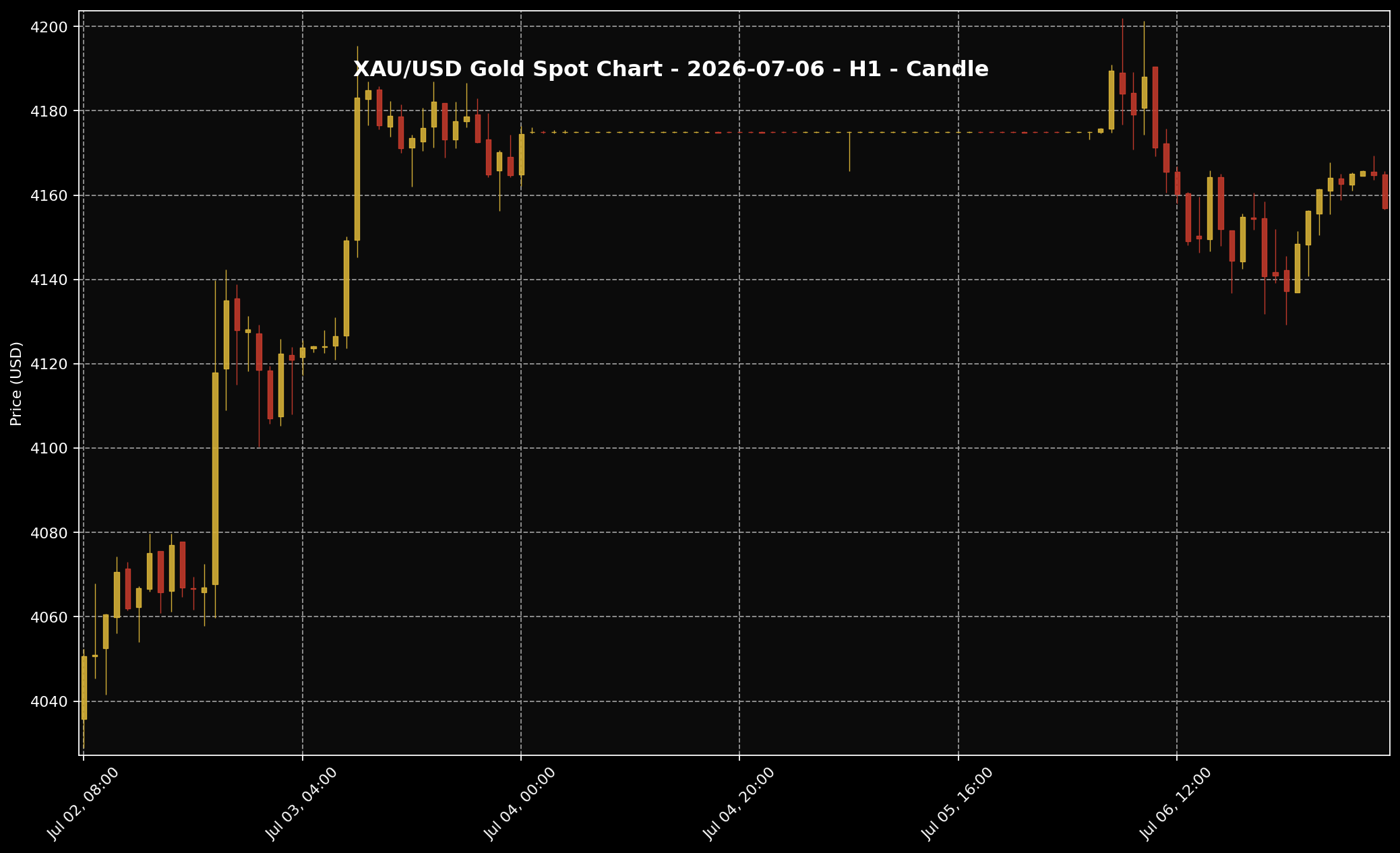 This chart shows the XAU/USD movement for the 6 July 2026 market session. Sifu Gold uses it as a visual reference, not a cue to buy emotionally.
1. By the closing snapshot for 6 July 2026, global spot gold was around USD4,148.47 per troy ounce. That worked out to about USD133.38 per gram. Using USD/MYR near 4.08451 at the same point, the same global spot move came to roughly RM16,944.46 per troy ounce, or around RM544.78 per gram. These Ringgit figures are global spot conversions, not local physical retail gold prices in Malaysia.
2. In simple terms, gold looked firmer earlier in the session and moved back towards the USD4,200 area, but that strength did not last. As the day went on, the market leaned back towards the US dollar, and gold began to give up some of its earlier ground. So this was not a fresh breakout. It was a market that tried to extend its rebound, then lost momentum again.
3. That matters because the move was not about gold suddenly becoming weak in the bigger picture. It was more about a session where buyers could not build enough follow-through. For readers of Sifu Gold, the main takeaway here is that gold was still holding at a high level, but the market did not yet have a strong enough reason to keep pushing confidently above the resistance area traders were watching.
What Is The Gold Chart Showing?
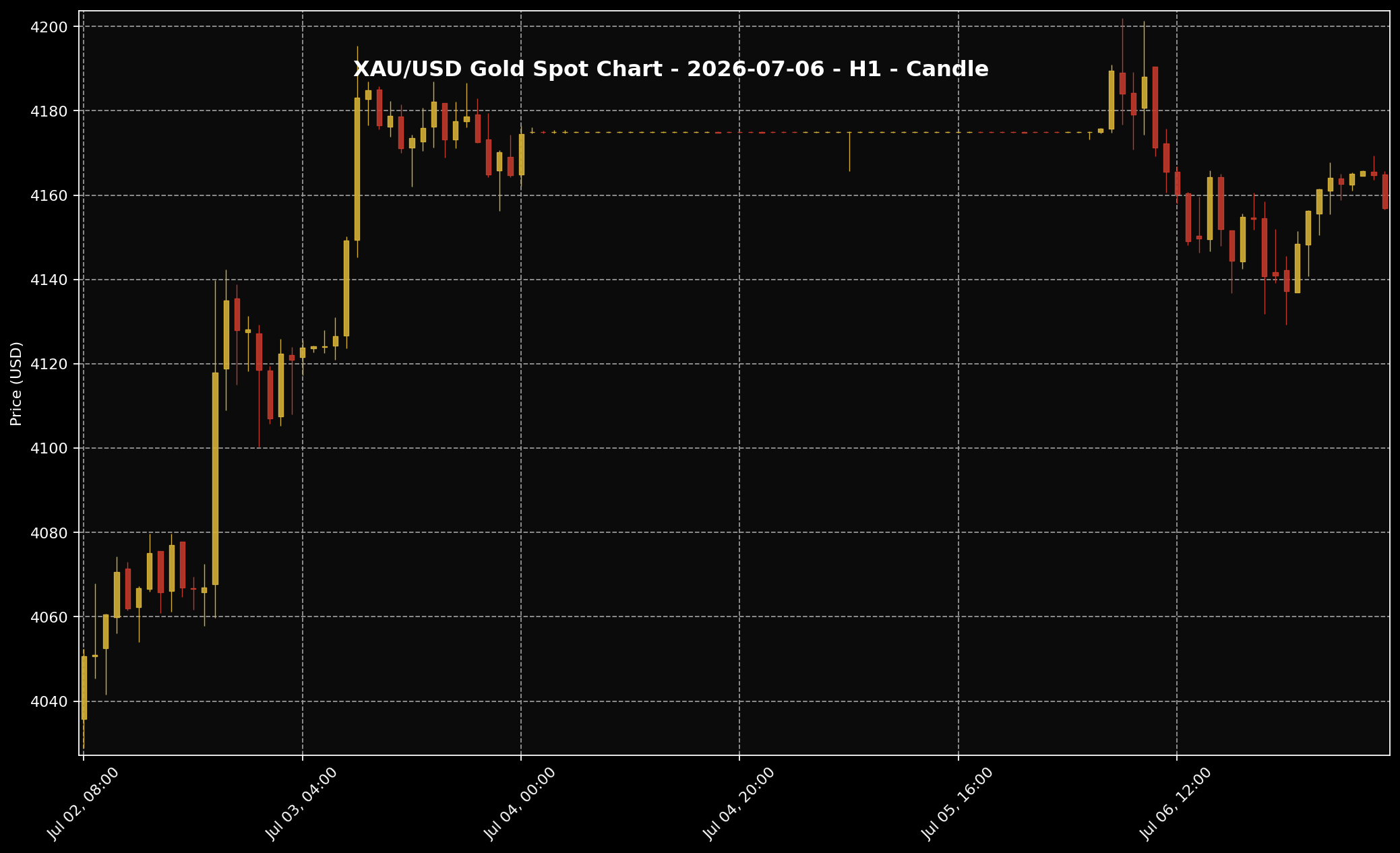 This chart helps readers see the gold price structure for the 6 July 2026 market session. It is used as market context, not as a trading signal.
1. If we read the H1 chart lightly, the structure is quite easy to follow. Gold pushed higher earlier in the session and managed to trade into the upper part of its recent range. That told us buyers were still trying to carry forward the rebound from the previous stretch.
2. The problem came when price moved closer to the USD4,200 zone. That area still looked heavy enough to slow things down. Kitco’s coverage also supported that same picture, with gold struggling to clear early resistance around USD4,200. Once price failed to hold near that area, the session started to look less like a breakout attempt and more like a rebound running out of steam.
3. By the close, gold was no longer sitting near the strongest part of the day’s move. So the safer chart reading is this: gold was still trying to recover, but the market was not ready to treat that rebound as a clear new leg higher. In other words, the chart was showing hesitation under resistance rather than a clean change in direction.
Why Did Gold Move This Way?
 The US dollar is often one of the key factors influencing gold prices. When the dollar is firmer, gold can face more noticeable pressure.
1. The clearest explanation starts with the US dollar turning firmer again. Reuters coverage recovered through MarketScreener pointed to gold slipping back from a two-week high as the dollar strengthened and the market shifted its focus to the Fed minutes. Put simply, when the dollar rises, gold often finds it harder to keep moving up because the metal becomes more expensive for buyers using other currencies.
2. At the same time, the market was still waiting for clearer guidance from the Federal Reserve. That matters because gold is very sensitive to the US rate story. When investors are unsure whether the Fed may stay firm for longer, they usually become more careful about chasing gold higher. So even if gold had some support underneath, the market still wanted another clue before leaning harder into that move.
3. Kitco added an important part of the same story. Gold was not trading in a vacuum. It still had some background support from earlier softer US jobs data and lingering safe-haven interest, but those positives were not enough to overpower the firmer dollar on this session. So the real story was not a dramatic drop. It was gold losing early momentum as macro caution returned.
What Does This Mean For Malaysian Gold Savers?
 For Malaysian gold savers, the key point is not only whether prices rise or fall. What matters more is budget, discipline and a clear purpose.
1. For Malaysian gold savers, looking at XAU/USD alone is never enough. A move in global gold may look small in US dollar terms, but what readers feel locally can still look different once USD/MYR is brought into the picture. That is why the Ringgit translation matters. On this session, the global spot conversion was around RM544.78 per gram, which gives a more familiar view of the market direction.
2. Still, that number should not be confused with a local physical retail gold price. A physical gold price in Malaysia can also reflect product premium, buy-sell spread, operating cost, logistics, and the pricing structure used by the seller. So the spot conversion is useful as a market guide, but it is not a one-to-one retail quote.
3. The wider lesson is that gold still reacts quickly to the US dollar and the Fed story. When those two drivers remain unsettled, gold can look stronger for a while and then lose part of that strength quite fast. For Malaysian readers, that is a reminder to read the market in full context first, instead of reacting only to one headline price or one short move during the day.
What Practical Action Makes More Sense?
 When gold prices move quickly, better decisions usually come from disciplined planning, not panic reactions.
1. If your goal is long-term gold saving, this kind of session usually does not call for a rushed decision. A more sensible starting point is to check your budget, look again at your monthly savings plan, and ask whether you are buying gold for long-term accumulation or simply reacting to short-term price movement.
2. If you already have a set monthly allocation for gold, phased buying can still make sense. The key is not to chase one perfect entry point. Many savers spend too much time trying to guess the lowest possible price, but end up building very little over time. A steadier method often suits ordinary savers better.
3. It also makes sense not to commit the full budget at once just because gold pulled back from an earlier high. If the market still looks mixed, waiting for clearer direction is also a disciplined choice. The better habit is to watch the US dollar, the Fed story, USD/MYR, and the local price you would actually pay in Malaysia before making any move.
Conclusion
Gold on 6 July 2026 did not collapse, but it could not keep its earlier strength once the US dollar firmed up again and the market turned cautious ahead of the Fed minutes. That is why the session looked more like a rebound losing momentum than a fresh breakout. For Malaysian gold savers, the more useful focus now is not to overreact to one day’s move. Read the price together with USD/MYR, keep the difference between global spot and local physical pricing in mind, and stay guided by budget and consistency. If you are building gold for the longer term, discipline still matters more than trying to catch one exact price.