

Table of Contents
- Introduction: The Common Question for Jewellery Owners
- Understanding the Concept of ‘Uruf’: The Exemption Limit for Jewellery Gold Zakat
- Why Do ‘Uruf’ Rates Differ by State?
- List of ‘Uruf’ Rates for Gold Zakat by State (Latest 2024/2025 Guide)
- Conclusion: ‘Uruf’ is a Leniency for You
Introduction: The Common Question for Jewellery Owners
“I have a lot of jewellery, but I wear all of it. Do I still have to pay Zakat?”. This is a question that often plays on the minds of jewellery owners, especially women. The answer is not a simple ‘yes’ or ‘no’. It depends on a very important but rarely understood Fiqh (Islamic jurisprudence) concept: **’Uruf’**. Understanding what the ‘Uruf’ for Gold Zakat is is the key to calculating the Zakat on your jewellery correctly and fairly.
This concept is a leniency (*rukhsah*) in Islam that can cause your Gold Zakat amount to be much lower, or perhaps not obligatory at all, even if the total weight of your gold exceeds the Nisab limit of 85 grams. This guide will explain the concept of ‘Uruf in depth, why its rates vary, and provide the latest list of rates across Malaysia for your reference. This is essential knowledge for every owner liable for Gold Zakat on jewellery.
Understanding the Concept of ‘Uruf’: The Exemption Limit for Jewellery Gold Zakat

The concept of what the ‘Uruf’ for Gold Zakat is is actually very simple and demonstrates how practical and realistic Islamic law is in celebrating cultural differences and daily life. It is not a concept designed to make things difficult, but rather to simplify and provide justice. Essentially, ‘Uruf is a ‘tolerance level’ or an exemption limit given specifically for gold that is worn as adornment. Understanding the philosophy behind this aspect of Gold Zakat is very important.
1. ‘Uruf’ Means “Local Custom or Reasonableness”
In the Arabic language, the word ‘Uruf means custom, or something that is known and well-accepted by a society. In the context of Gold Zakat, it refers to the weight limit of worn jewellery that is considered reasonable, normal, or not excessive according to the customs of the community in a particular place or state. It is a measure of social ‘appropriateness’. For example, what is considered normal wear in Kelantan might be seen as excessive in Kuala Lumpur, and vice versa.
2. The Fiqh Principle: Zakat is Only Obligatory on the Excess
The basic ruling in the Shafi’i school of thought states that jewellery worn as a basic necessity (*haajah asliyah*) for women is exempt from Zakat. This is because adornment is a natural disposition and a need for women. However, Islam also forbids excessiveness (*israf*). Therefore, the scholars established that if the wearing of jewellery exceeds the limit of reasonableness or ‘Uruf, then the excess amount is no longer considered a ‘necessity’, but has instead transformed into a form of savings (hoarding) or showing off.
Therefore, only this excess amount is liable for Zakat. The benefit of this is that it is a huge leniency. You do not have to pay Gold Zakat on the entire weight of your jewellery. You only have to pay on the portion that is considered ‘savings’. This makes the obligation of Gold Zakat fairer and more realistic.
Why Do ‘Uruf’ Rates Differ by State?
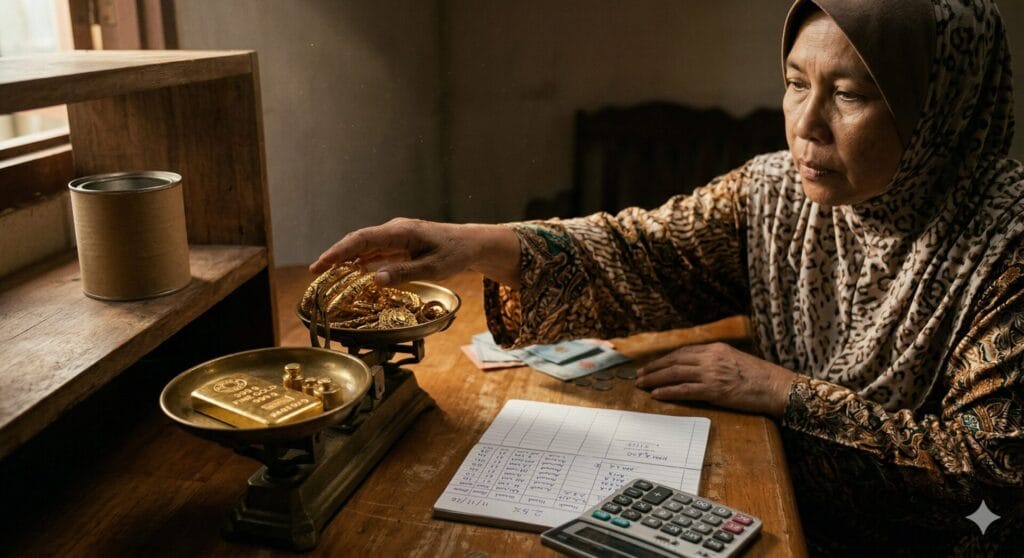
You might notice when you look at the list below that the ‘Uruf’ rate for Johor is very different from the ‘Uruf’ for Gold Zakat in Selangor or the Federal Territories. This is not a mistake or a contradiction in the law. This difference exists for two main reasons that are very logical and are in line with the philosophy of ‘Uruf itself. It celebrates the socio-cultural diversity in Malaysia. This difference is a key feature in the implementation of Gold Zakat.
1. It is Based on the Local Customs and Lifestyle of the Community
The societal view of what is considered “excessive wear” is very subjective and differs from one place to another. For example, in some cultures or states (like on the East Coast of Malaysia), it is a custom for women to wear heavier and larger pieces of jewellery, especially during festive occasions. In large urban areas like the Klang Valley, however, a more modern lifestyle might view the wearing of excessive gold as impractical.
Therefore, the limit of reasonableness or ‘Uruf is set according to the local social reality and customs. The Islamic religious council in each state will take these factors into account when determining the ‘Uruf rate. This is what is meant by Islamic law being flexible and celebrating cultural diversity, an important aspect in determining the rate of Gold Zakat.
2. It is Determined by the Respective State Islamic Religious Councils (MAIN)
In Malaysia, based on the Federal Constitution, matters of Islamic religious administration, including the collection and distribution of Zakat, fall under the jurisdiction of the states. Each State Islamic Religious Council (MAIN) or its appointed Zakat institution has its own Fatwa Committee. It is this committee that will conduct studies, hold discussions, and ultimately issue a fatwa to set the ‘Uruf’ rate for their state. The benefit of this is that it ensures the law that is implemented is relevant, fair, and most suitable for the community in that area.
List of ‘Uruf’ Rates for Gold Zakat by State (Latest Guide)

The following is a list of the ‘Uruf’ rates by state to serve as your guide. This list is based on the latest data. Using the correct rate is critical for your Gold Zakat calculation.
IMPORTANT Note: These rates can change from time to time depending on the decisions of the State Fatwa Committees. Before making your final calculation, you are advised to check and reconfirm with the official Zakat centre website in your state to get the most up-to-date information.
| State | ‘Uruf’ Rate (grams) | Notes / Source |
|---|---|---|
| Johor | 850 g | Majlis Agama Islam Negeri Johor |
| Kedah | 170 g | Lembaga Zakat Negeri Kedah |
| Kelantan | No ‘Uruf’ | Zakat is due on the entire weight if it exceeds the 85g Nisab (following the majority scholarly opinion). |
| Melaka | 800 g | Zakat Melaka. The old rate (RM5000) has been standardised to grams. |
| Negeri Sembilan | 200 g | Majlis Agama Islam Negeri Sembilan |
| Pahang | 200 g | Majlis Ugama Islam dan Adat Resam Melayu Pahang |
| Perak | 500 g | Majlis Agama Islam dan Adat Melayu Perak |
| Perlis | 170 g | Majlis Agama Islam dan Adat Istiadat Melayu Perlis |
| Penang | 165 g | Zakat Pulau Pinang |
| Selangor | 800 g | Lembaga Zakat Selangor |
| Terengganu | 850 g | Majlis Agama Islam dan Adat Melayu Terengganu |
| Federal Territories | 800 g | PPZ-MAIWP (Kuala Lumpur, Putrajaya, Labuan). The old rate of 150g has been increased. |
| Sabah | 150 g | Majlis Ugama Islam Sabah. |
| Sarawak | 775 g | Tabung Baitulmal Sarawak |
Conclusion: ‘Uruf’ is a Leniency for You
Now you understand what the ‘Uruf’ for Gold Zakat is. It is not a concept designed to complicate the calculation of Gold Zakat, but rather a form of leniency granted by Shariah law to the owners of jewellery, in line with the realities of life and local customs. It is proof of the beautiful flexibility of Islamic law, which always takes context and reasonableness into account.
- The main key in calculating the Gold Zakat on jewellery by state is to identify the ‘Uruf’ rate where you reside and only calculate the Zakat on the excess weight, on the condition that your total gold ownership (including savings) exceeds the 85-gram Nisab.
- Always refer to a legitimate source. A quick check on your state’s official Zakat centre website is the smartest step to ensure your Gold Zakat obligation is valid, accurate, and accepted by Allah (SWT).
✨ WANT TO START SAVING IN GOLD?
With just RM100, you can begin your gold savings journey with Public Gold.
This is the perfect opportunity to build a stronger and more secure financial future.