

What happened to gold on 17 July 2026? Gold tried to hold its ground near the USD4,000 area after a pressured week. By the late-session snapshot, it had moved back above that level, but the story was not strong enough to call it a clean recovery. For Malaysian gold savers, the useful point is not just whether gold was up or down for one day. The better question is why it moved that way, what the price looks like in Ringgit, and what action makes more sense for long-term saving.
- Introduction
- What Happened To Gold On 17 July 2026?
- What Is The Gold Chart Showing?
- Why Did Gold Move This Way?
- What Does This Mean For Malaysian Gold Savers?
- What Practical Action Makes More Sense?
- Conclusion
What Happened To Gold On 17 July 2026?
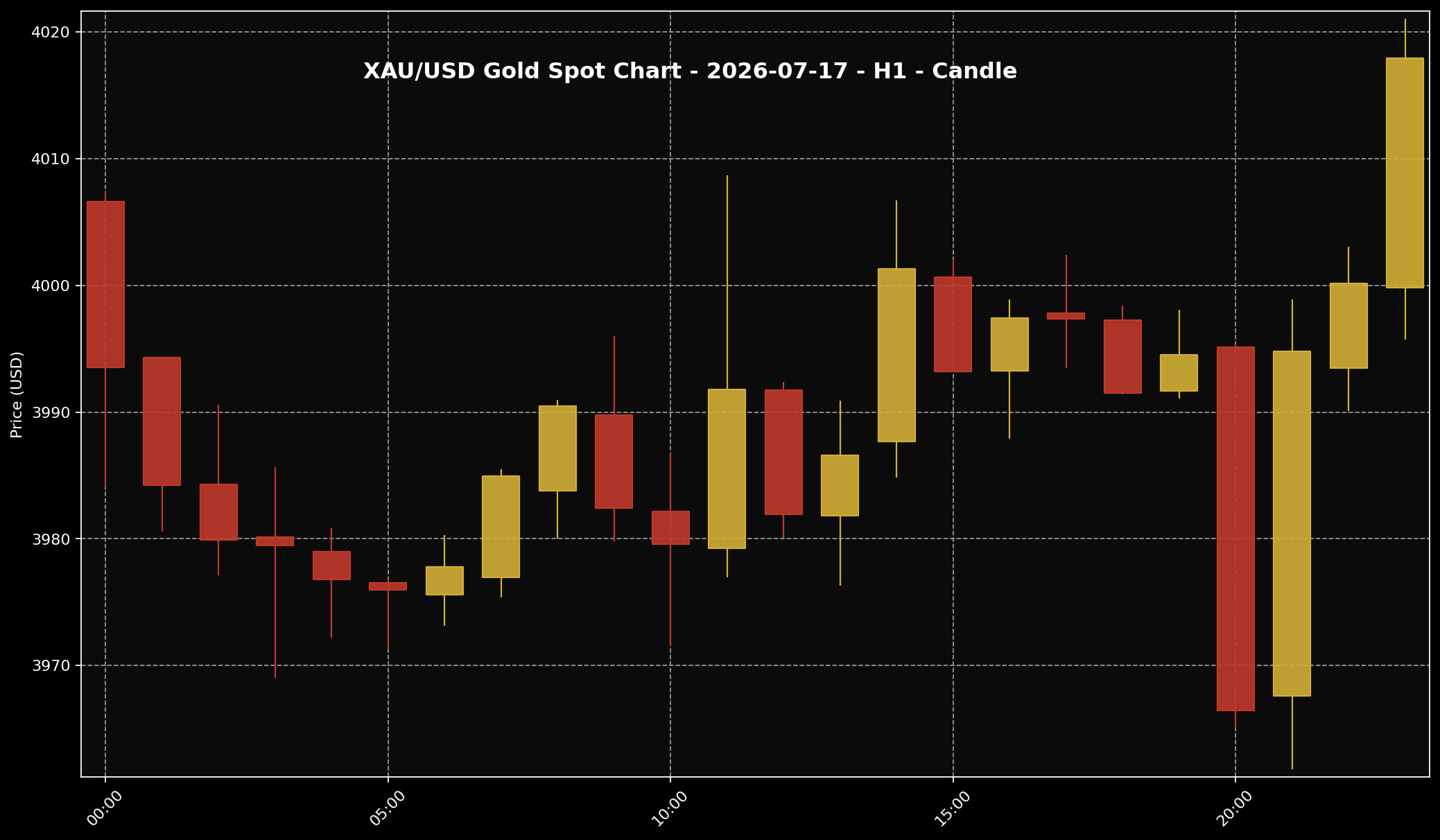 This chart shows the XAU/USD movement for the 17 July 2026 market session. Sifu Gold uses it as a visual reference, not a cue to buy emotionally.
1. Around 11:00 PM Malaysia time, global spot gold was around USD4,017.91 per troy ounce. Converted into grams, that works out at about USD129.18/g. Using the USD/MYR rate of around 4.09576 at the same snapshot, the global spot value was roughly RM16,456.41 per troy ounce, or about RM529.09/g.
2. These Ringgit numbers are global spot conversions. They are not the same as local physical retail gold prices in Malaysia. The price a buyer sees for physical gold can include product premium, buy-sell spread, local pricing structure, operating costs and movement in USD/MYR.
3. The main story was not that gold suddenly became strongly bullish. It was more a case of gold trying to stabilise near USD4,000 after a difficult week. The market was still dealing with inflation worries, interest-rate concerns, firm US Treasury yields and a stronger US dollar. So gold managed to hold up in the snapshot, but the bigger pressure had not fully cleared.
What Is The Gold Chart Showing?
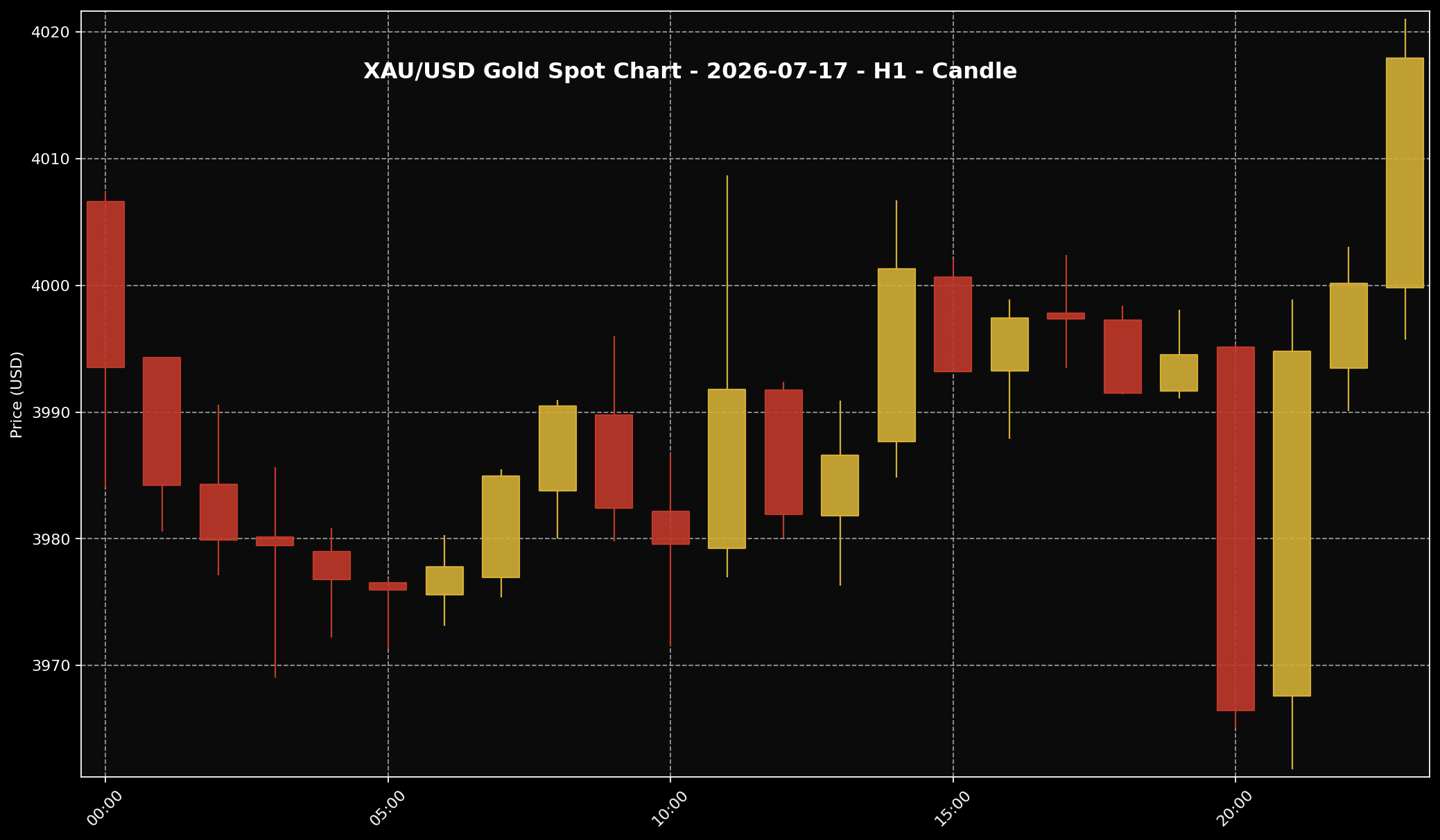 This chart helps readers see the gold price structure for the 17 July 2026 market session. It is used as market context, not as a trading signal.
1. If we look at the H1 chart, gold briefly slipped below USD4,000 in the final candle being referred to. The low was around USD3,995.69, before price moved back up and closed around USD4,017.91. Put simply, the market tested the area below USD4,000, but gold did not stay there for long in that snapshot.
2. From a simple price-structure view, that looks like an attempt to hold after pressure. It does not mean gold had already found a guaranteed floor. It only tells us that buyers came back in around that area during the snapshot window. That is useful to know, but it should not be treated as a trading setup.
3. The way I would read this at Sifu Gold is simple: the chart was showing a sensitive market. When gold trades around a big round level like USD4,000, many investors will watch whether that area holds or breaks. But for gold savers, the chart should be used as market context, not as an instruction to enter or exit.
Why Did Gold Move This Way?
 The US dollar is often one of the key factors influencing gold prices. When the dollar is firmer, gold can face more noticeable pressure.
1. The pressure came from a few things happening at the same time. The market was still thinking about inflation and US interest rates. When investors think rates may stay high, gold usually finds it harder to build strong momentum. Gold does not pay interest, so when US bonds are offering attractive yields, some investors prefer that steady return instead.
2. A stronger US dollar also made the picture harder for gold. Global gold is priced in USD. When the dollar strengthens, buyers using other currencies need to pay more in their own money for the same ounce of gold. That can slow demand, especially when the market is already unsure about where interest rates are heading next.
3. There was also the oil and Middle East risk layer, which kept inflation worries alive. Sometimes that kind of uncertainty can support gold as a safe-haven asset. But on 17 July 2026, that support was not strong enough to change the whole story. Gold tried to hold near USD4,000, while rate worries, yields and the US dollar still kept pressure in the background.
What Does This Mean For Malaysian Gold Savers?
 For Malaysian gold savers, the key point is not only whether prices rise or fall. What matters more is budget, discipline and a clear purpose.
1. For Malaysian gold savers, looking at XAU/USD alone is not enough. Gold may be quoted globally in US dollars, but Malaysians think, save and buy in Ringgit. That is why USD/MYR matters. If the Ringgit moves against the US dollar, the Ringgit value of gold can look different from the global chart.
2. In this snapshot, global spot gold around USD4,017.91/oz translated to about RM529.09/g using USD/MYR at 4.09576. That is a useful way to understand the global gold price in Malaysian terms. But again, this is still a spot conversion, not a direct local physical retail price.
3. For physical gold, buyers normally deal with spread and premium. That is part of the physical market. So if global spot gold moves a little, local retail prices may not move exactly one-to-one. A better way to look at it is to check several things together: global spot gold, USD/MYR, current physical gold pricing, the spread, and your own monthly budget.
What Practical Action Makes More Sense?
 When gold prices move quickly, better decisions usually come from disciplined planning, not panic reactions.
1. In my view, this kind of market is better treated as a time to organise your plan. If you already have a monthly gold-saving budget, small staged buying can still make sense if it fits your cash flow. The focus is not to guess the lowest price. The focus is to build grams steadily without disturbing other commitments.
2. If this month’s budget is tight, there is no need to force it. Gold will always move up and down. Do not go in heavily all at once just because the price tried to hold near USD4,000. It is better to protect emergency cash, family commitments, monthly payments and the saving plan you have already set.
3. If the market still feels unclear, waiting for a clearer picture is also a disciplined decision. You can watch whether gold stays above the USD4,000 area, what happens to the US dollar, where US Treasury yields move next, and how USD/MYR behaves. For gold savers, good decisions usually come from budget and discipline, not from reacting to one candle.
Conclusion
Gold on 17 July 2026 tried to hold near the USD4,000 area after a pressured week. The global spot snapshot was around USD4,017.91/oz, or roughly RM529.09/g when translated into Ringgit. But inflation worries, rate concerns, US Treasury yields and the stronger US dollar were still part of the bigger market story. For Malaysian gold savers, the better approach is to read this situation in a more organised way. Check your budget. Know the difference between global spot price and local physical gold pricing. If you already have a monthly gold-saving plan, continue gradually according to your ability. If your budget is not ready yet, there is no need to chase the price. In gold saving, consistency and budget control usually matter more than trying to get every price move exactly right.