

On 20 June 2026, gold did manage to edge higher compared with the previous session. But if we look at it properly, this still did not feel like a strong recovery. The better way to read it is this: gold was trying to find its footing after earlier pressure, but the market still did not show enough strength to say the wider story had clearly changed. For Malaysian gold savers, that matters more than one small green session.
- Introduction
- What Happened To Gold On 20 June 2026?
- What Is The Gold Chart Showing?
- Why Did Gold Move This Way?
- What Does This Mean For Malaysian Gold Savers?
- What Practical Action Makes More Sense?
- Conclusion
What Happened To Gold On 20 June 2026?
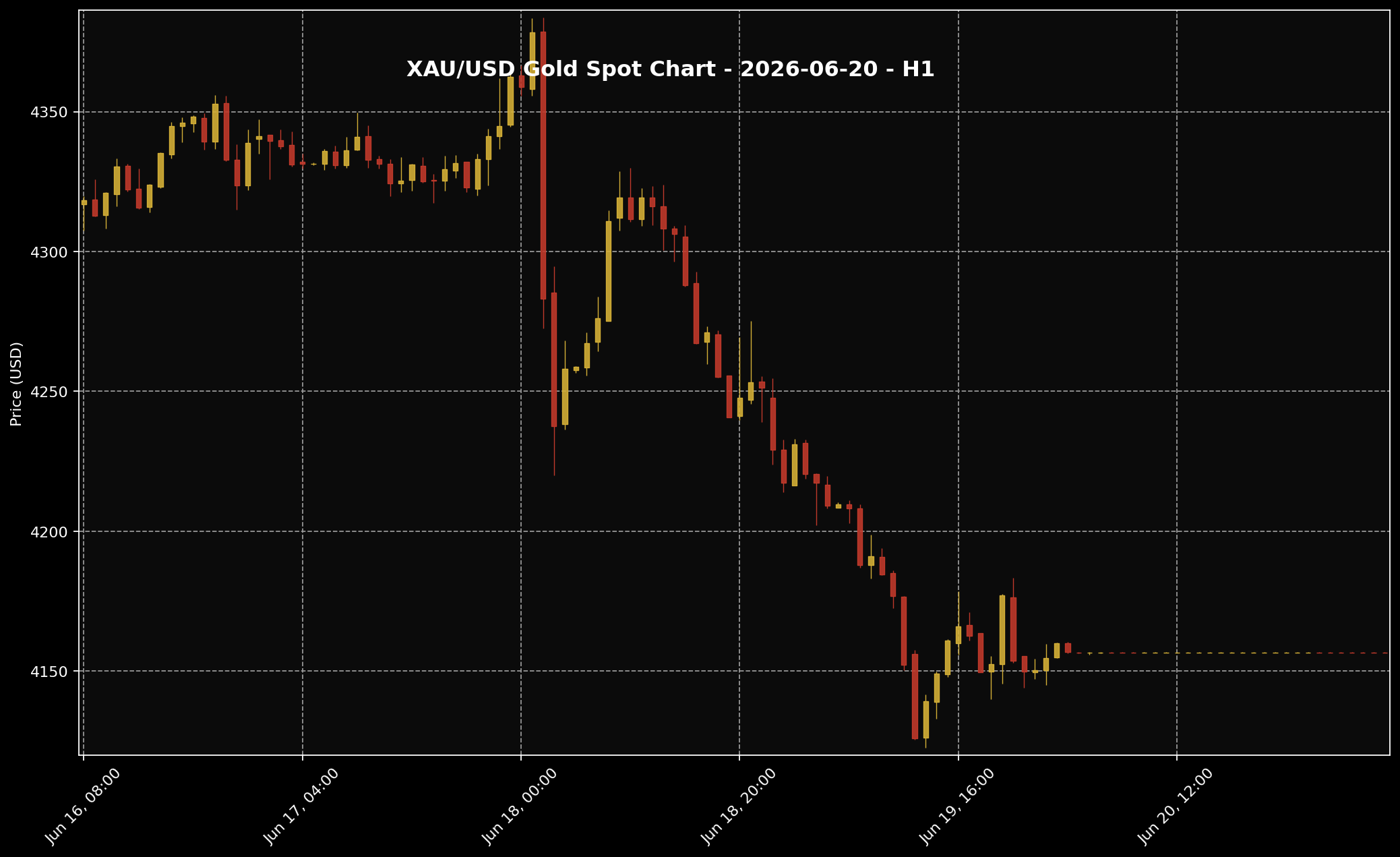 This chart shows the XAU/USD movement for the 20 June 2026 market session. Sifu Gold uses it as a visual reference, not a cue to buy emotionally.
1. Using the main market snapshot taken at 11:00 PM Malaysia time, XAU/USD was around USD4,156.63 per troy ounce. USD/MYR was around 4.1375. That put the global gold price at roughly RM17,198.06 per troy ounce, or about RM552.93 per gram.
2. Compared with 19 June 2026, gold was slightly higher, but only slightly. The previous session showed XAU/USD around USD4,152.07 per troy ounce, while the global gold price in Ringgit was around RM552.39 per gram. So yes, gold moved up on 20 June 2026, but this was not the kind of rise that looked decisive or forceful.
3. That is the key point here. The market was no longer falling as heavily as before, but the rebound was still too small to call it a proper shift in direction. The more honest read is that gold was trying to stabilise after a weaker session, rather than launching into a convincing recovery. One more thing worth keeping clear: these figures reflect the global spot gold price, not local physical gold pricing in Malaysia. So if readers see global gold edging higher, that does not mean local physical gold prices will move in exactly the same way.
What Is The Gold Chart Showing?
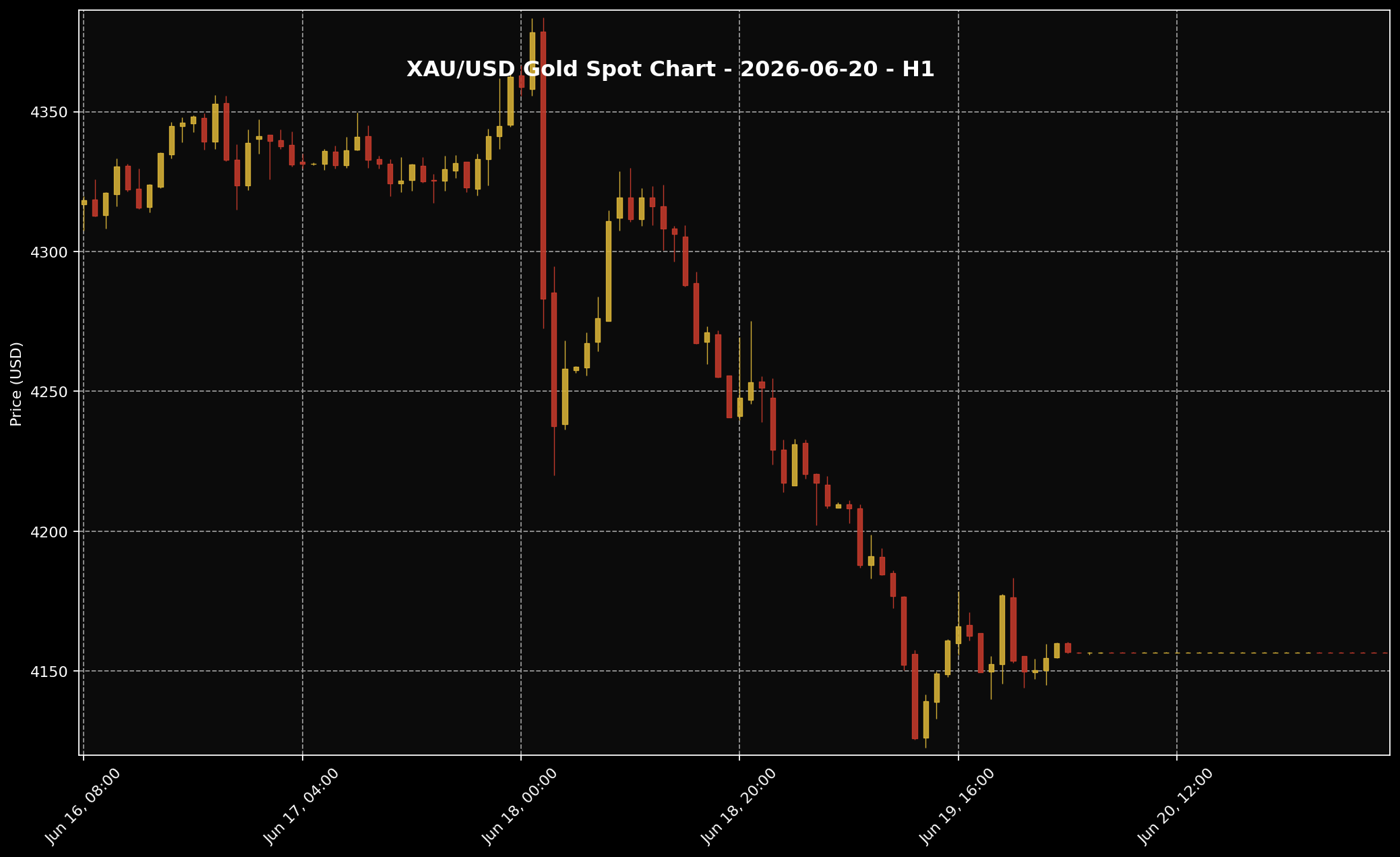 This chart helps readers see the gold price structure for the 20 June 2026 market session. It is used as market context, not as a trading signal.
1. If we look at the H1 XAU/USD chart for 20 June 2026, the structure is fairly easy to read. Before this session, gold had been trading at a higher level. Then came a sharper drop. After that fall, price did try to bounce, but the rebound did not hold for long. The market then stayed weak before showing signs of flattening out towards the end of the session.
2. So from a chart-reading point of view, gold looked more like it was trying to stop the fast decline rather than returning to real strength. That is an important difference. There was an attempt to recover, but follow-through still looked limited. In plain language, buyers did try to step back in, but not strongly enough to take back full control.
3. If I had to simplify the chart story, I would put it this way: the upper area still looked difficult for price to reclaim after the earlier drop, while the lower area started to look like a place where gold was trying to hold itself together. This is not a buy or sell signal. It is simply a market structure reading to help readers see that gold may be building a base, but that base still did not look firm enough yet.
Why Did Gold Move This Way?
 The US dollar is often one of the key factors influencing gold prices. When the dollar is firmer, gold can face more noticeable pressure.
1. The broader story still looked familiar. The macro background that had been weighing on gold had not really disappeared. Even though gold finished the 20 June 2026 session a little higher, the market was still being shaped by expectations of US interest rates staying restrictive, a US dollar that had not weakened much, and Treasury yields that still remained a competing home for money.
2. Why does that matter so much? Because gold does not pay interest. So when US bond yields remain attractive and the dollar stays relatively firm, larger investors tend to treat gold more carefully. Gold can regain support when fear picks up or when markets start to believe rate cuts are coming closer, but for this session, that support still did not look strong enough to rewrite the overall tone.
3. In simple terms, 20 June 2026 did not show a market that had fully escaped old pressure. It looked more like a session where gold was catching its breath after the previous decline, while the bigger macro weight in the background was still there.
What Does This Mean For Malaysian Gold Savers?
 For Malaysian gold savers, the key point is not only whether prices rise or fall. What matters more is budget, discipline and a clear purpose.
1. For Malaysian gold savers, the important point is that the local Ringgit picture did not do much to change the story. USD/MYR was almost flat at the time of reference. That means the small move higher in the Ringgit value of gold mostly came from gold itself, not from a major currency swing.
2. That is why the global gold price converted into Ringgit only rose slightly, from around RM552.39 per gram on 19 June 2026 to around RM552.93 per gram on 20 June 2026. The move was real, but still modest. It was not the kind of jump that clearly tells readers gold has suddenly turned strong again.
3. So what should readers take from this? Not panic, and not rush either. This was better read as a market that was trying to recover a little after a drop, not a market that had already settled everything and moved into a fresh strong phase. And as always, global spot gold is not the same thing as local physical gold pricing. Local prices can still be shaped by exchange rates, product premiums, spreads and seller pricing structure. For people saving in gold consistently, the takeaway is fairly straightforward: read this session with a clear head. There was some improvement, yes, but there was still not enough evidence to say the pressure had fully passed.
What Practical Action Makes More Sense?
 When gold prices move quickly, better decisions usually come from disciplined planning, not panic reactions.
1. In my view, the more sensible action still depends on why you are saving in gold in the first place. If you already have a proper gold-saving plan, a session like this does not automatically call for a sudden change. You can continue with the usual approach: buy gradually, follow your budget, and stick to the schedule you already set for yourself.
2. If you have been waiting because price just bounced a little, try not to read that small rebound as proof that the market is now fully back on gold’s side. That is where people often end up reacting emotionally. It makes more sense to review your budget first, revisit your savings target, and make sure your emergency money is not being disturbed.
3. If your budget is comfortable, phased buying still looks like the more structured approach. If your budget is tight, or if the market still feels unclear to you, it is perfectly fine to wait and watch a bit longer. What makes less sense is committing a large amount at once just because one session turned slightly green. In a market like this, discipline usually helps more than impulse.
Conclusion
In the end, 20 June 2026 showed that gold was trying to recover, but the move still did not look strong enough to count as a clear change in direction. Price did rise a little compared with the previous session, but the chart still suggested a market trying to rebuild its footing after notable pressure. For Malaysian gold savers, this is not the time to jump to quick conclusions. It makes more sense to see this move as a reminder that gold is still sensitive to the US rate story, the US dollar and Treasury yields. If your goal is long-term gold saving, the practical direction still stays the same: follow your budget, buy gradually if it suits your plan, and avoid making decisions based only on one small rebound.