

What happened to gold on 24 September 2026? It moved above USD4,300 early in the session, but could not stay there. Resilient US labour data, rising oil prices and high Treasury yields brought rate worries back into the picture. Gold then slipped into lower price areas. For Malaysian gold savers, the useful part is not simply knowing that the price fell. It is understanding why the mood changed and what that global spot price really means once we translate it into Ringgit.
- Introduction
- What Happened To Gold On 24 September 2026?
- What Is The Gold Chart Showing?
- Why Did Gold Move This Way?
- What Does This Mean For Gold Savers?
- Conclusion
What Happened To Gold On 24 September 2026?
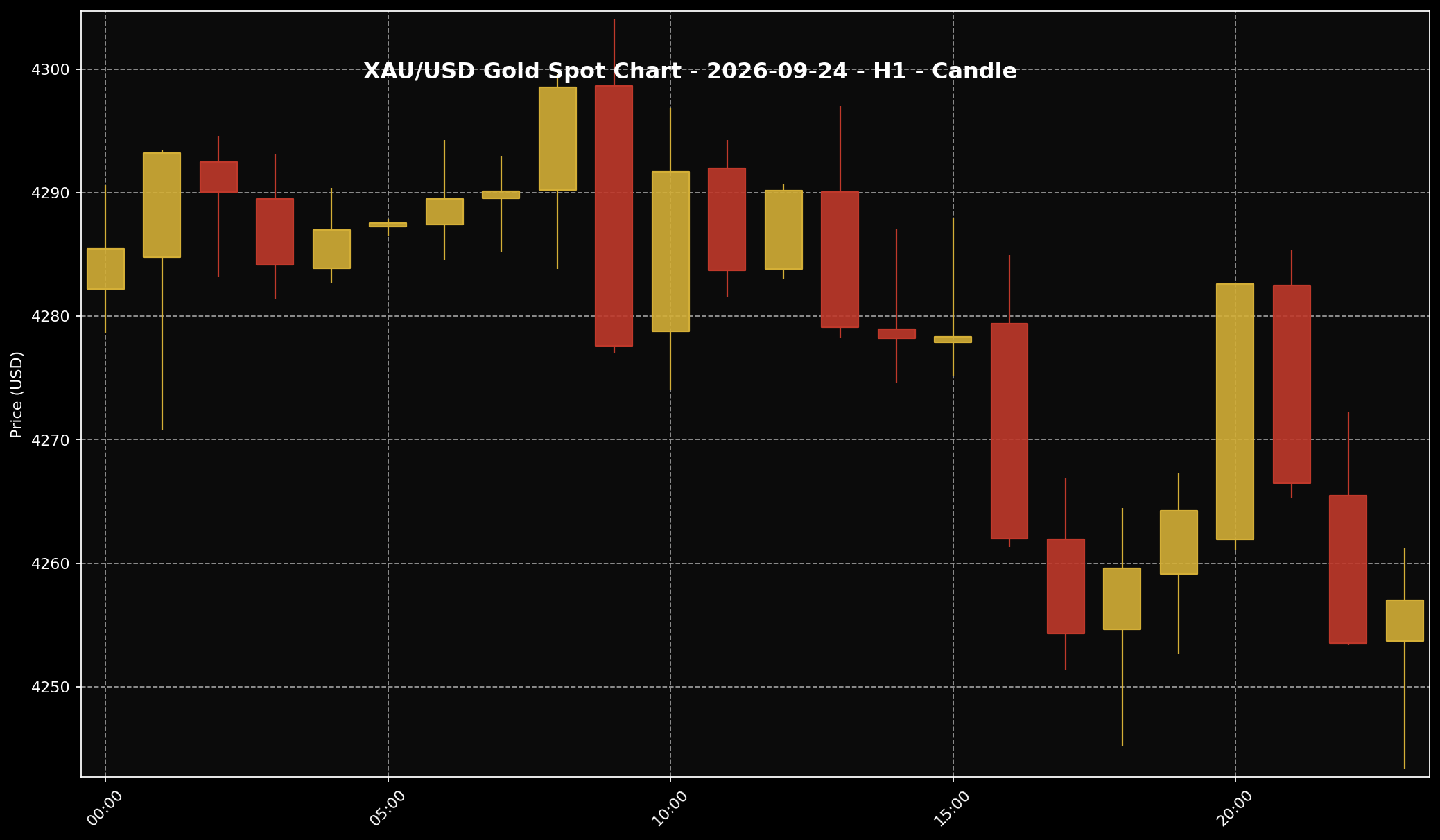 This chart shows the XAU/USD movement for the 24 September 2026 market session. Sifu Gold uses it as a visual reference, not a cue to buy emotionally.
1. Gold climbed to around USD4,304.11 per troy ounce early in the session. The move did not last. Price fell below USD4,280 and later moved under USD4,260 as the market turned its attention back to US rates and Treasury yields.
2. At 11:00 pm Malaysia time, the approved reference price stood near USD4,257.00 per troy ounce, or about USD136.87 per gram. With USD/MYR around 4.08549, that was equal to roughly RM17,391.94 per troy ounce or RM559.16 per gram.
3. These Ringgit figures are conversions of the global spot price, not Malaysian physical gold retail prices. The main point from the session is simple: gold’s early push above USD4,300 faded once rate expectations and high bond yields came back into focus.
What Is The Gold Chart Showing?
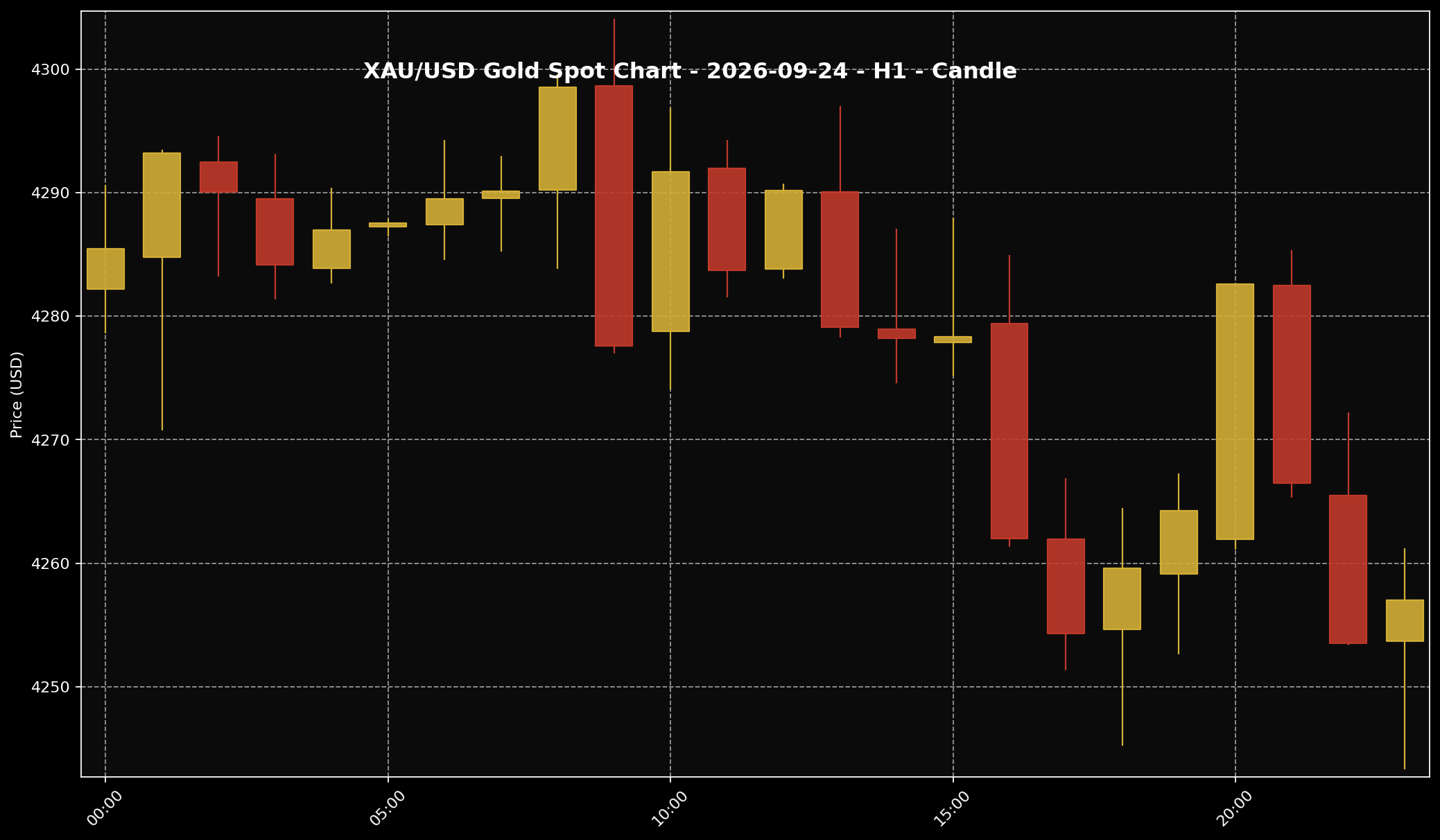 This chart helps readers see the gold price structure for the 24 September 2026 market session. It is used as market context and price-structure reference only.
1. If we look at the one-hour chart, gold tried to hold above USD4,300 but could not manage it. After reaching its early high, the price began moving into progressively lower areas.
2. Gold later bounced towards USD4,282.66, but that recovery was not strong enough to take it back to the earlier high area. During the final reference hour, it fell as low as roughly USD4,243.32 before recovering to around USD4,257.
3. Kitco also reported that gold had broken below its 50-day support. That fits the pressure seen during the session. Still, this chart only tells us what happened on the day. It does not tell us where gold must move next.
Why Did Gold Move This Way?
 The US dollar is often one of the key factors influencing gold prices. When the dollar is firmer, gold can face more noticeable pressure.
1. The story starts with US jobless claims staying below 200,000. That suggested the US labour market was still holding up well. When the economy is not showing much weakness, the market has more reason to think the Fed may keep rates tight or raise them further.
2. Oil prices were also rising. More expensive oil can keep inflation concerns alive, so the rate story became even more important. Reuters linked the pressure on gold to tighter Fed policy expectations and rising Treasury yields, while Kitco highlighted the US 10-year yield at around 5.15%.
3. Put simply, bonds can look more attractive when they offer higher returns. Gold does not pay interest, so it becomes harder for the metal to hold its momentum in that kind of market. Tension between the US and Iran still brought some safe-haven interest, but it was not enough to outweigh the pressure from oil, rates and bond yields.
What Does This Mean For Gold Savers?
 For Malaysian gold savers, the key point is to understand the gap between global spot price and local physical price, then act according to budget and discipline.
1. For Malaysian gold savers, one day’s drop is better used as a reason to review the market than as a reason to react emotionally. The move on 24 September showed that gold was still very sensitive to changing expectations for US interest rates.
2. The converted global spot price of around RM559.16 per gram is not the same as the physical gold price you may pay in Malaysia. Local pricing can also include USD/MYR movements, product premiums, buying and selling spreads, operating costs and the seller’s pricing structure.
3. If gold saving is already part of your monthly budget, you can continue in stages according to what you can comfortably afford. If cash flow is tight, there is no need to force it. Protect your emergency fund and family commitments first, and do not commit the full budget at once simply because gold fell for one day.
Conclusion
Gold failed to stay above USD4,300 on 24 September 2026 as resilient US labour data, rising oil prices and high Treasury yields brought tighter Fed policy expectations back into focus. Safe-haven demand was still there, but it was not strong enough to stop gold from moving lower. For Malaysian gold savers, trying to guess the lowest point from one session is not very useful. Check the physical price you actually pay, understand the spread and stick to the budget you have already set. Save in stages if it suits your plan. If the budget is not ready, waiting is also a disciplined choice.