

What happened to gold on 4 July 2026? This was a weekend closed-market reference, not a fresh full trading session. So the fairest way to read gold here is to start with the latest available snapshot, then compare it with the last completed session on 3 July 2026. On that basis, gold was still holding at a firm level. For Malaysian gold savers, that matters because the earlier support story had not faded once the market moved into the weekend.
- Introduction
- What Happened To Gold On 4 July 2026?
- What Is The Gold Chart Showing?
- Why Did Gold Move This Way?
- What Does This Mean For Malaysian Gold Savers?
- What Practical Action Makes More Sense?
- Conclusion
What Happened To Gold On 4 July 2026?
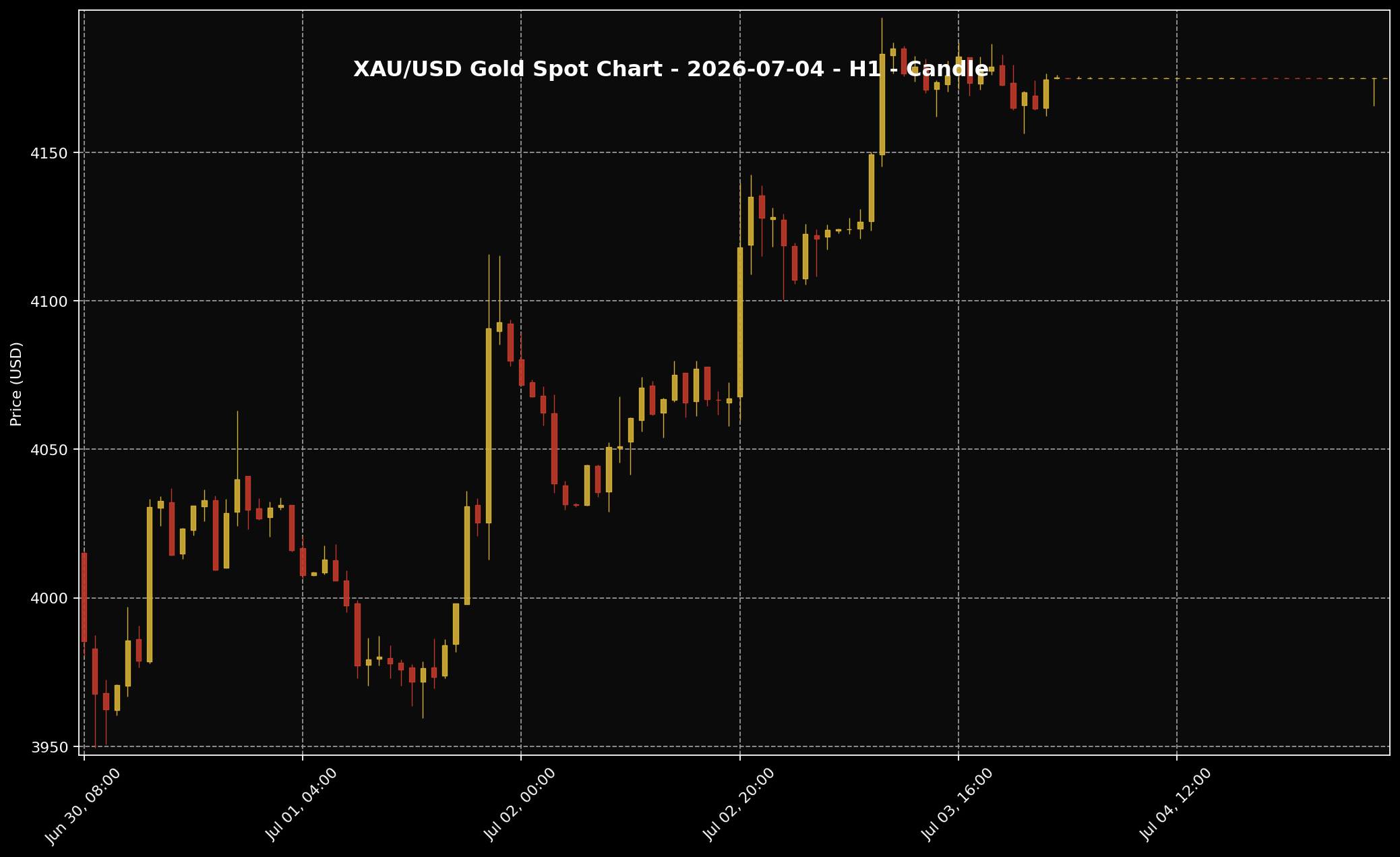 This chart shows the XAU/USD movement for the 4 July 2026 market session. Sifu Gold uses it as a visual reference, not a cue to buy emotionally.
1. On 4 July 2026, the latest available gold snapshot was around USD4,174.88 per troy ounce. That works out to about USD134.23 per gram. Using the USD/MYR reference near 4.07097, the same global spot reading comes to roughly RM16,995.80 per troy ounce, or about RM546.43 per gram.
2. The comparison point that matters most is 3 July 2026, because that was the last completed session before the weekend reference took over. On that session, gold was around USD4,164.72 per troy ounce, or roughly RM16,954.13 per troy ounce and RM545.09 per gram in global spot Ringgit terms. So by the latest available weekend reference, gold was still holding a little higher than that last full-session anchor.
3. One point needs to stay clear from the start. These Ringgit figures are global spot conversions, not local physical retail gold prices in Malaysia. They help readers see the same market move in Ringgit terms, but they are not a one-to-one copy of what local buyers will actually pay.
What Is The Gold Chart Showing?
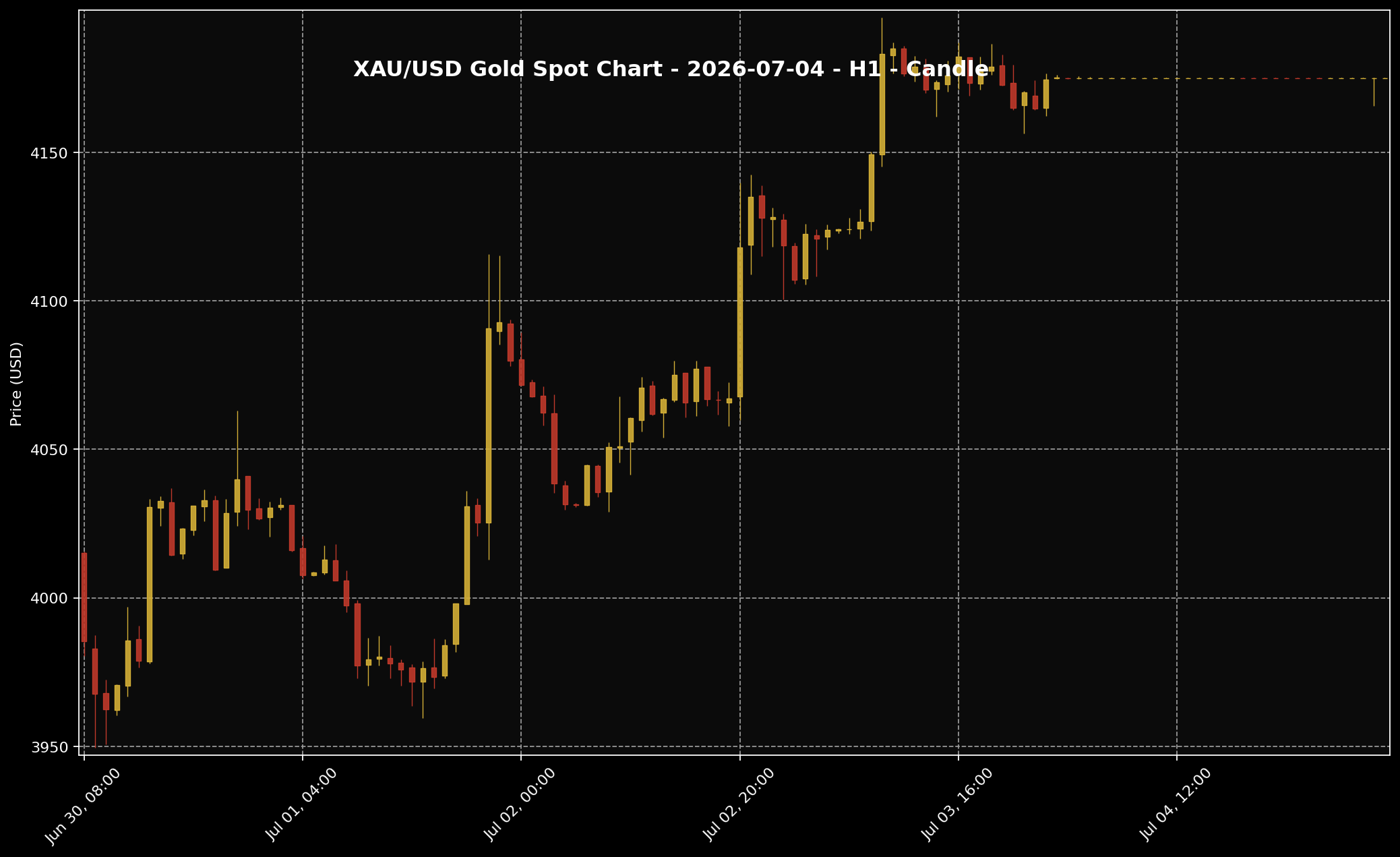 This chart helps readers see the gold price structure for the 4 July 2026 market session. It is used as market context, not as a trading signal.
1. If we look at the approved H1 chart reference, gold was still sitting near the upper part of its recent range after the earlier move higher. It was not showing a sharp reversal lower, but it was also not giving a fresh breakout story for Saturday.
2. The final part of the chart looks tight and controlled. That suits a market that has already shifted into weekend closed conditions rather than one still reacting to a brand-new live trigger. In simple terms, gold had already made its bigger move, and the later reading was more about holding that ground.
3. So the safer chart reading is this: gold stayed elevated into the weekend, but the structure does not support turning this into an aggressive momentum call. It is a firm hold, not a new rush higher.
Why Did Gold Move This Way?
 The US dollar is often one of the key factors influencing gold prices. When the dollar is firmer, gold can face more noticeable pressure.
1. The clearest explanation still comes from the last completed session on 3 July 2026. Weaker-than-expected US jobs data helped take some pressure off the US dollar and Treasury yields, and that gave precious metals room to stay supported into the holiday-thinned backdrop.
2. That is why the weekend reference still looked firm even without a brand-new catalyst on Saturday. The market was still carrying the support built in the previous completed session, rather than reacting to a fresh live trigger.
3. Put simply, gold did not need a new weekend surge to hold up here. It was still reflecting the softer jobs story from Friday, when the labour data cooled some of the pressure coming from the US dollar and the wider rates picture.
What Does This Mean For Malaysian Gold Savers?
 For Malaysian gold savers, the key point is not only whether prices rise or fall. What matters more is budget, discipline and a clear purpose.
1. For Malaysian gold savers, this weekend reference still matters because it shows where gold was holding before the next full trading week begins. In this case, the translated global spot reading was still around RM546.43 per gram, which tells readers that gold was still sitting at a firm level in Ringgit terms as well, not just in US dollars.
2. But looking at XAU/USD alone is never enough. A global spot conversion is not the same thing as the local physical price you may see from a dealer or platform in Malaysia. Local pricing can still look different because of product premium, buy-sell spread, product type, and the way exchange-rate effects feed into the local price structure.
3. So the better takeaway is not to treat RM546.43 per gram as an exact buying price. The more useful point is that global gold was still holding firm, and that gives you a clearer base for comparing the market story with the actual local price in front of you.
What Practical Action Makes More Sense?
 When gold prices move quickly, better decisions usually come from disciplined planning, not panic reactions.
1. If you already have a proper gold-saving plan, the more sensible approach is still to stick to your budget and build in stages. There is no need to chase a weekend reference just because gold is still sitting near a firm level.
2. If you are thinking about adding to your savings, first compare the global spot picture with the real local physical price you would actually pay. That gap matters more than many people realise. Sometimes the global chart looks straightforward, but the better guide is still your monthly budget, the local spread, and the purpose behind the savings itself.
3. If your plan is still unclear, it may make more sense not to commit the full budget at once. Let the new trading week begin first, then watch whether the same support story still holds or whether the next move in the US dollar, Treasury yields, or fresh economic data starts to shift the tone again.
Conclusion
So the story for 4 July 2026 is not a new active gold session. It is a closed-market weekend reference built on the latest available snapshot and compared with the last completed session on 3 July 2026. On that basis, gold was still holding firm near the upper part of its recent range. For Malaysian gold savers, the practical lesson is simple: understand the market reason first, keep global spot and local physical pricing separate, and make any next move based on budget and discipline rather than weekend price excitement.